Beijing's Brazilian Habit: China Leans on One Supplier as It Trims the Import Bill
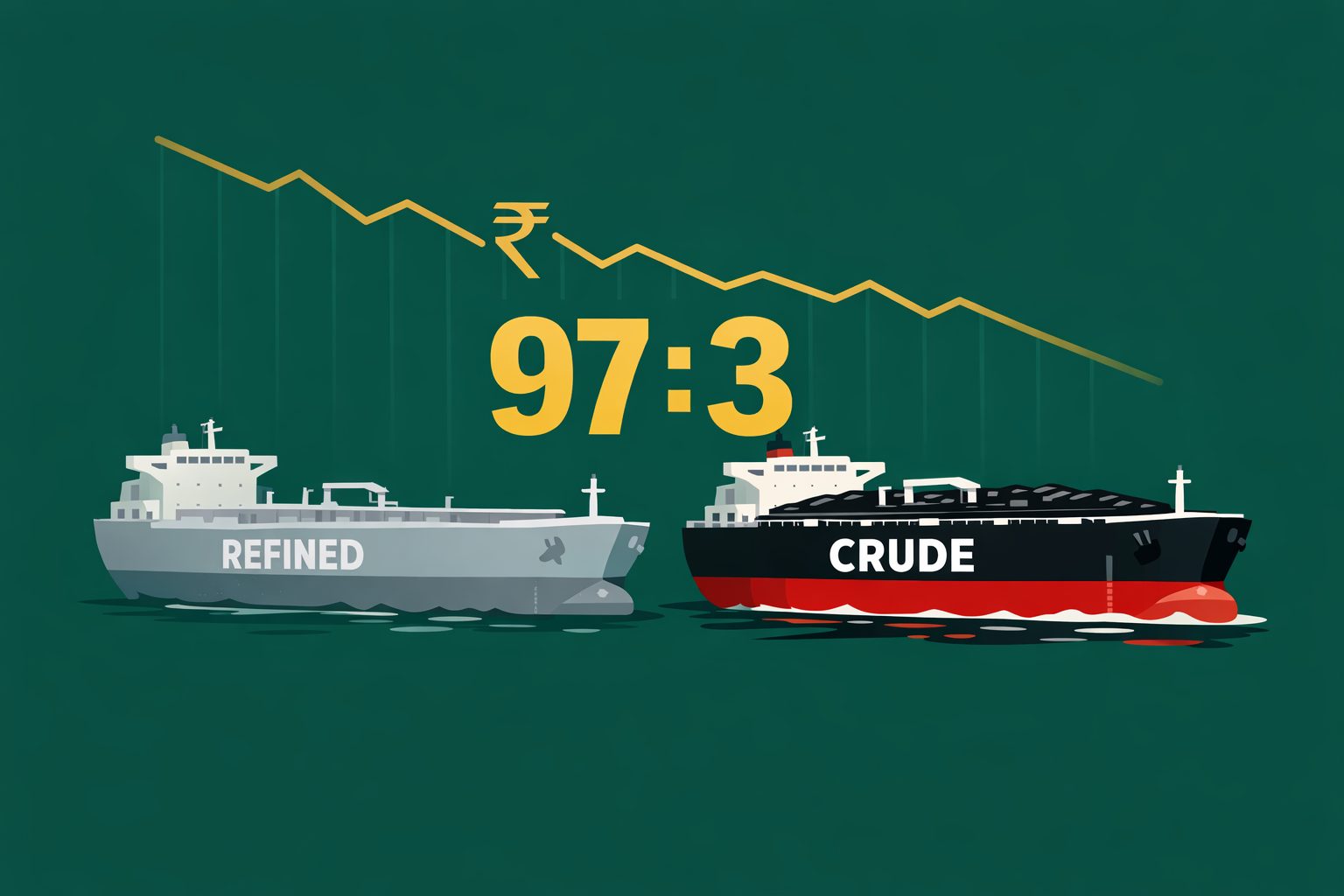
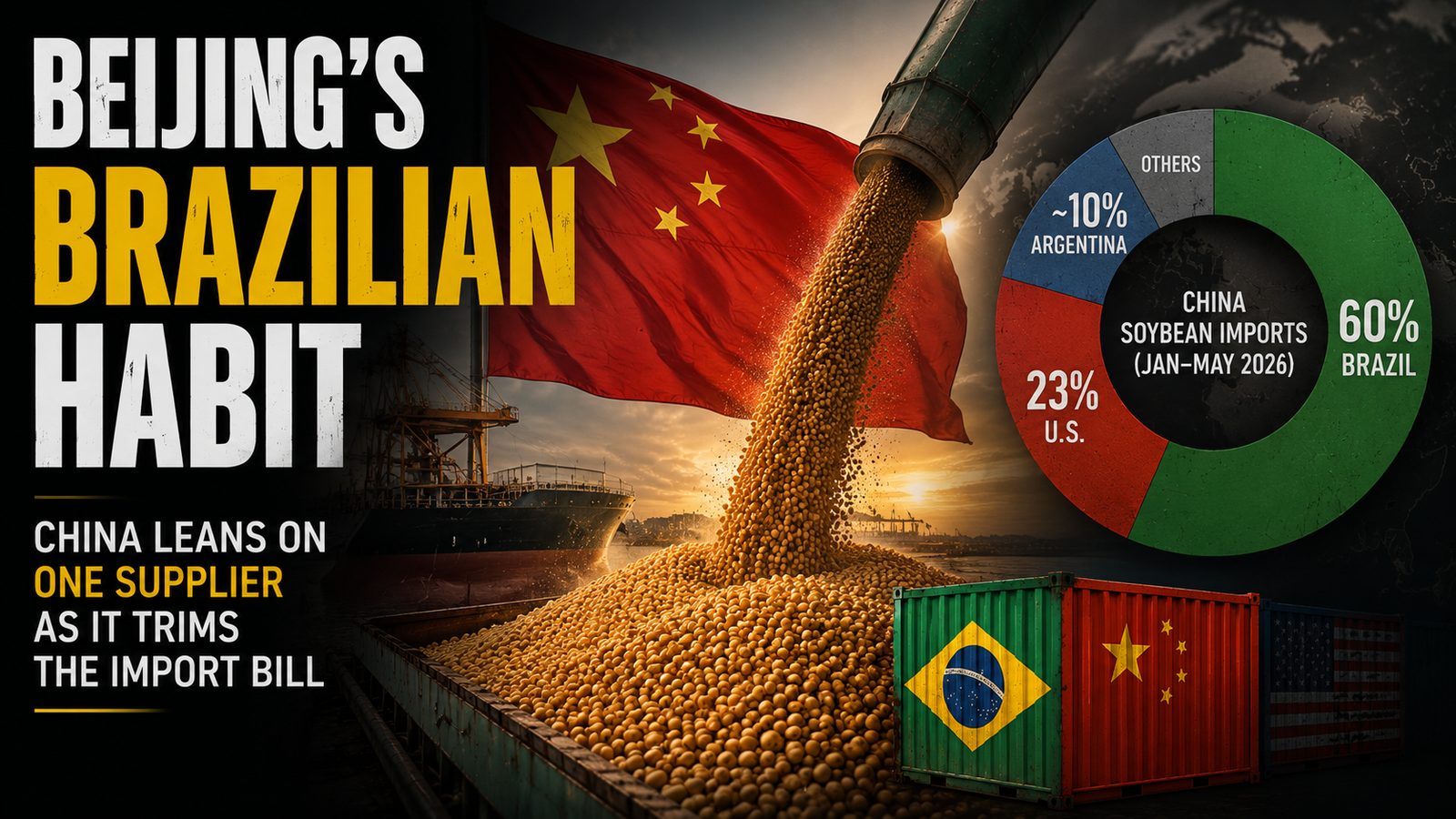
China is buying its soybeans from fewer places, and paying close attention to how much it buys at all. In the first five months of 2026, Brazil supplied more than 60% of China's soybean imports, with the United States at 23% and Argentina near 10%. A year earlier Brazil's share was even higher, above 73%. The world's biggest oilseed buyer is concentrating its business in one supplier.
The tariff math
The tariff math explains most of it. Brazilian soybeans carry a 3% Chinese import tariff, while US beans still attract an additional 10% levy — a gap worth $30 to $75 a tonne. For private Chinese crushers watching margins, that spread is decisive, and it steers cargo after cargo toward Brazilian origin. Monthly arrivals ran above 10 million tonnes through the April-to-June stretch as crushers stocked up on the cheaper bean.
Volume is only half the story
Beijing is also trimming, not just switching. China has started turning away some Brazilian cargoes and tightening inspections — early signs that a broader plan to cut food imports is beginning to bite. A country that has spent two decades as the bottomless buyer of the soybean world is signalling that the appetite has a ceiling, and that ceiling is now policy, not just price.
Downstream effects
For the oil market, the effects run downstream. China crushes those beans mainly for animal feed, and the soybean oil that comes off the crush has been piling up at home — enough that China has turned into a modest exporter of soyoil rather than a sink for it. More Chinese soybean oil on the world market adds to global soft-oil supply, while softer Chinese palm demand loosens a market Southeast Asian exporters had counted on. One country's crush decisions ripple through palm, soy and rapeseed at once.
The concentration risk
Leaning on Brazil for two-thirds of your soybeans works beautifully until Brazilian logistics, weather or politics hiccup. China knows this, which is why it keeps a foot in Argentine and US supply and has been rebuilding rapeseed channels through Australia after its tariff fight with Canada. A buyer this large treats diversification as insurance, even when one origin is winning on price today.
The India connection
For India and the wider soft-oil complex, China is the gravitational centre that sets the terms everyone else trades around. When Beijing pulls hard on Brazilian beans, it shapes how much South American oil and meal is left for other buyers. When it trims imports, it loosens global balances. India does not buy many soybeans, but it lives with the soyoil prices that China's crush decisions help set.
What to watch
- Whether China's import-trimming is a structural shift or a negotiating posture
- How the US-Brazil contest for the Chinese market evolves
- Whether Chinese soyoil exports keep climbing
The country may be buying from fewer places, but its choices still move the whole board.
The convening point
China's crush and buying decisions set the backdrop for every soft-oil trade, and GLOBOIL India 2026 is where those threads get connected. The 29th edition takes place 29 September to 1 October at The Westin Mumbai Powai Lake, reading China's demand alongside South American supply and Indian imports.