Tanks Fill, Prices Fade
Key takeaway: Malaysian palm oil futures lost roughly 5% in September 2026, their first monthly decline in four months, as stocks rose to 1.65 million tonnes and exports slowed. India's 24 September import duty cut is the clearest source of demand support heading into the fourth quarter.
Palm oil closed out September on the back foot. The benchmark December contract on Bursa Malaysia Derivatives settled at 4,626 ringgit a tonne on 29 September, roughly $1,135, which was its weakest close since 21 July. A small bounce on the final session, helped by firmer vegetable oils in Dalian, did little to change the picture. The contract was down about 5.4% for the month by midday on 30 September.
That ends a three-month run of gains. Palm had been carried higher through the northern summer by biofuel optimism and steady buying. The supply side has now caught up.
Why Malaysian palm oil stocks matter now
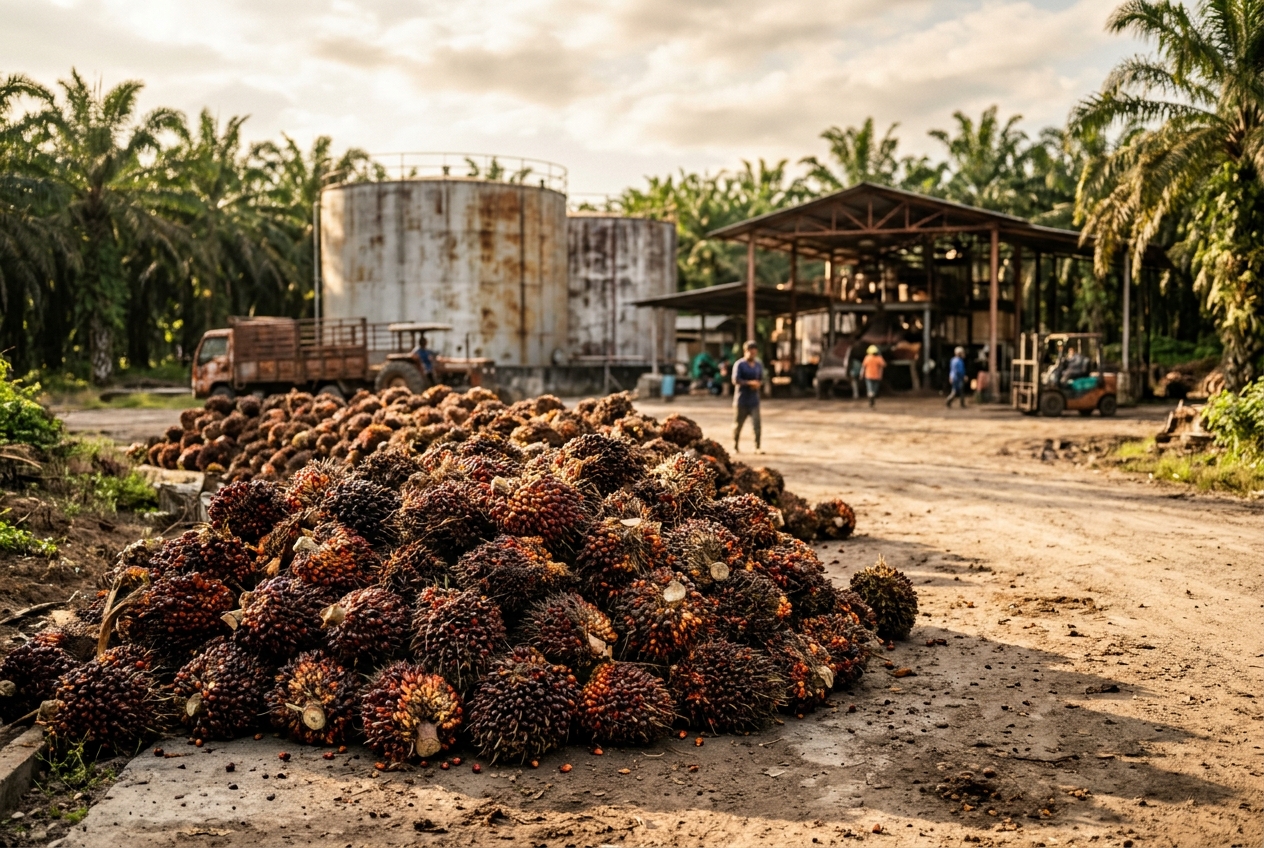
The pressure comes mostly from Malaysia's own balance sheet. Official data for August showed end-month inventories rising 15.2% from July to 1.65 million tonnes. Output climbed to 1.82 million tonnes while exports dropped 7.5%. That combination is the classic seasonal squeeze. Trees are entering their peak yield months and shipments are not keeping pace.
September looks no better on the export side. Cargo surveyor estimates for 1–25 September put Malaysian shipments between 15.1% and 24.3% below the same stretch of August. If that holds through month-end, the September stock figure due from the Malaysian Palm Oil Board in mid-October is likely to show another sizeable build. Traders are already pricing in that risk, which explains why rallies have been sold quickly.
Peak-season output usually runs through October before tapering into the year-end wet season. Until then, the burden of proof sits with demand.
India's duty cut: how big a cushion?
The most important demand signal came from New Delhi. Effective 24 September, under a Finance Ministry customs notification issued the day before, India cut basic customs duty on crude palm oil and crude soybean oil from 10% to 5%. Crude sunflower oil duty went to zero. Refined palm and soybean oil duty fell from 32.5% to 27.5%, and refined sunflower oil from 32.5% to 22.5%.
The government framed the move as consumer relief and an inflation measure ahead of the festival season. For the market, it lowers the landed cost of every crude cargo heading to Indian ports. That matters a great deal for palm, because India buys more of it than any other country.
There is a catch. The cut is not palm-specific. Sunflower oil gained the largest relative advantage, with crude duty removed entirely. Soybean oil, which has been winning share in India all year, gets the same 5-point reduction as palm. So the policy should lift India's total edible oil buying, but palm still has to compete on price to win the extra tonnes.
Recent import data shows how hard that competition has been. Industry data from the Solvent Extractors' Association of India shows crude palm oil imports in August fell 22.4% year on year to 760,000 tonnes. Crude soybean oil imports jumped 50.7% to 555,000 tonnes over the same month. Across November–August, India's edible oil imports rose 4.5% to 13.62 million tonnes. Palm still leads the basket at 6.42 million tonnes, but the August numbers show buyers switching quickly when the spread moves against it.
What this means for Indian refiners and buyers
For Indian buyers, a softer palm market combined with lower duty is a useful window. Landed costs for October and November shipments are falling on two fronts at once. Refiners who held back in August and September because of tight margins now have room to rebuild stocks before Diwali demand peaks and winter blending begins.
The risk sits further out. Malaysian stocks will not keep building forever. If the market comes to see El Niño as a credible threat to 2027 output, the forward curve could steepen fast. Lower duty also leaves less policy room if global prices spike again in the new year.
Outlook: what to watch in October
Three data points will set the tone over the next four weeks:
- MPOB September supply and demand data (mid-October). A stock reading well above 1.65 million tonnes would confirm the bearish case and could test support near the July lows.
- Indian port arrivals for October. The first full month of lower duty will show whether palm is regaining share from soybean oil or whether the cut mostly benefits sunflower oil.
- Indonesian biodiesel policy and export levies. Any firm signal on higher blending would tighten exportable supply and could reverse sentiment quickly.
Our view is that palm remains in a seasonal soft patch, with the downside limited by Indian price sensitivity. Discounts to soybean oil should widen enough to pull Indian buyers back into palm. The heavier selling may already be done, but a sustained recovery probably needs a turn in the Malaysian stock cycle, and that is unlikely before November. This is market analysis, not investment advice.
Meet the market at GLOBOIL India 2026. Duty changes, stock cycles and the palm–soy spread are what move India's edible oil trade. GLOBOIL India 2026, the 29th edition of the world's leading edible oil and agri-trade conference, brings together the buyers, refiners, origin sellers and policymakers who shape them. Join us at The Westin Mumbai Powai Lake, Mumbai, 29 September – 1 October 2026.