Crushing Faster Than China Can Eat
TL;DR: China's commercial soybean oil stocks were close to 1.5 million tonnes at the end of October, up 4.3% from a year earlier and a seasonal high, because crushers are running hard while consumption is soft. Exports have more than tripled this year, and that outflow is now part of the global vegetable oil price story.
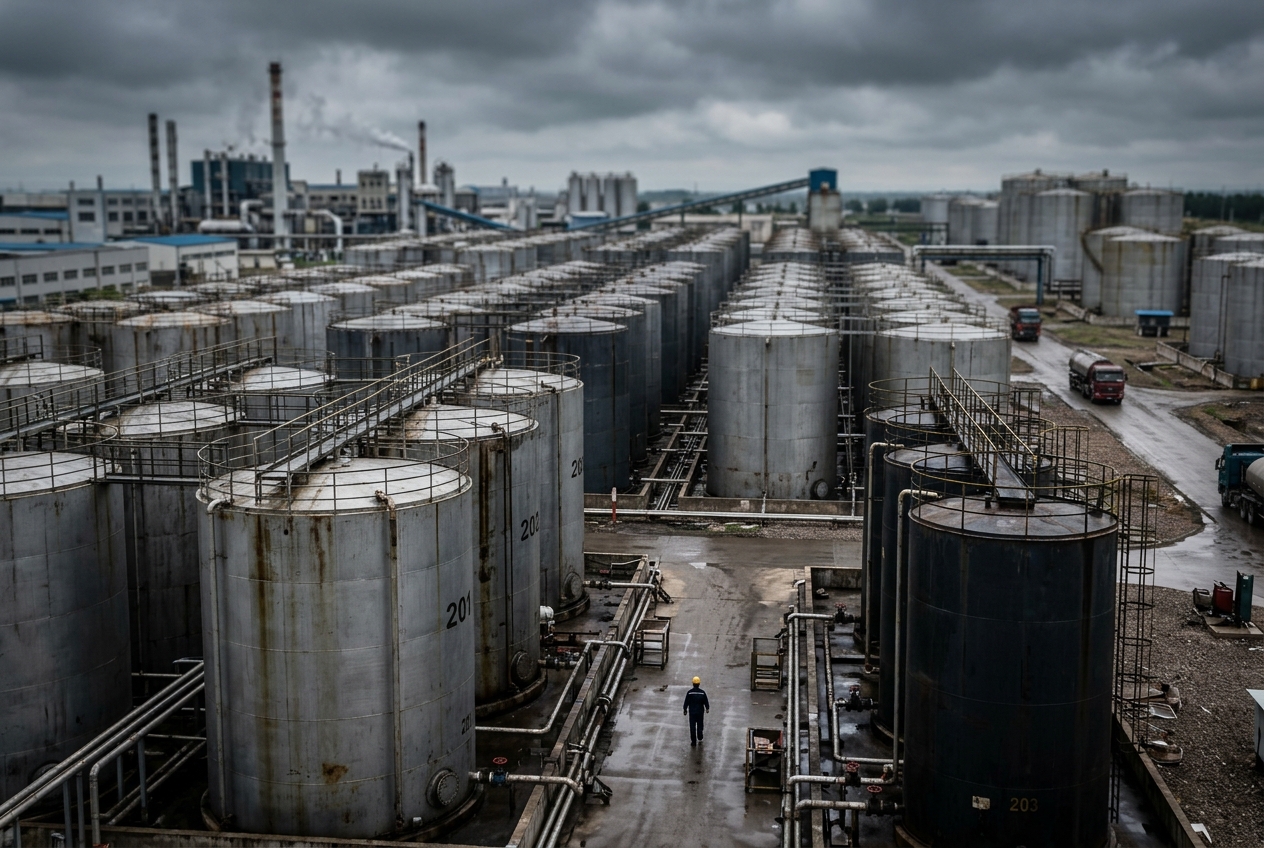
China is making more soybean oil than it can sell at home. Industry tracking put commercial stocks at nearly 1.5 million tonnes on 30 October, 4.3% above the same point last year and the highest for the time of year in at least two years of comparable data. Dalian's most-active soyoil contract dropped as much as 1% on 3 November, and closed that session down 1.38%.
A crush that does not respond to weak demand
Crush margins are driven mostly by the value of the meal, the livestock feed that comes out alongside the oil. Chinese buyers are bringing in more soybeans from Brazil and the United States, a flow helped by a trade truce between Beijing and Washington. Plants are running at high utilisation, and weekly soybean meal stocks reached their highest in more than two years in October before easing slightly.
The oil is the by-product that nobody asked for. Domestic consumption is subdued, tied to slower economic growth and less spending on eating out. When output is set by feed demand and oil demand is weak, the surplus piles up in tanks. That is the situation traders describe now: production outpacing sales and deliveries.
Exports are the pressure valve
Beijing's exporters have taken notice. Soybean oil shipments in the first nine months of 2026 more than tripled from a year earlier, to nearly 800,000 tonnes. That is a small number against global trade, which is dominated by palm, soy and sunflower flows measured in tens of millions of tonnes. But it is a marked change for a country that has historically been an importer of vegetable oils, and it matters at the margin.
Marginal tonnes set prices. Surplus Chinese soyoil offered abroad adds to a market that is already comfortable. Malaysian palm is heading into a record stock position, Black Sea sunflower supply is described by trade analysts as ample, and crude oil has been softening on hopes of calmer US-Iran relations, which lowers the biodiesel pull on every feedstock. The Dalian decline this week came from two sources the market can see: rising domestic inventory and cheaper crude.
The India consequence
For India, the world's largest edible oil importer, soyoil is already the story of the month. Industry data show October soyoil arrivals at a record 653,000 tonnes, out of total vegetable oil imports of 1.74 million tonnes. Refiners bought ahead of Diwali, supported by the 24 September duty cut that halved the basic duty on crude soybean oil from 10% to 5% and took the effective rate from 16.5% to 11%.
A heavy supply of cheap soyoil in Asia gives Indian buyers more choice and more leverage. It also raises a question the trade will be asking in coming weeks: can soyoil keep its discount to palm and sunflower if the Chinese surplus keeps moving abroad? We have not verified the destinations of China's export cargoes, so any link to Indian purchases specifically should be treated as a possibility rather than a finding.
What would change the picture
Three variables matter. The first is the crush rate. If Chinese margins squeeze or soybean arrivals slow, oil output will fall and stocks can drain quickly. The second is domestic demand; a seasonal lift in cooking and food-service use over winter would help, though recent consumption trends are not encouraging. The third is export growth. If Chinese sellers continue to push volume, they will keep a lid on global soyoil values and set a lower floor for other oils.
US policy also sits in the background. American biofuel demand determines how much domestic soyoil is available to export, and any shift in blending rules changes the competitive position of Chinese product abroad. That is a scenario to watch, not a prediction.
For now the direction is clear. Chinese tanks are full, Dalian is lower, and the surplus is leaning on international prices. Buyers in India and elsewhere should expect soyoil to stay competitive against other oils into the new year, with the main risk being a sudden change in crush behaviour. This is market analysis, not investment advice.
Where the soyoil debate continues
The balance between soy, palm and sunflower will be one of the central questions for buyers planning 2027 cover. GLOBOIL India 2026, the 29th edition of the world's leading edible oil and agri-trade conference, takes place from 29 September to 1 October 2026 at The Westin Mumbai Powai Lake, Mumbai. Delegates will hear how crush economics in China, Brazil and the US are reshaping supply, and what it means for Indian procurement. Plan your visit at GLOBOIL India.