Palm's Shrinking Export Pool
Key takeaway: Indonesia's palm oil industry projects 2027 exports of 29.73 million tonnes, down 12.3% from an estimated 33.89 million tonnes in 2026, as production falls 3.1% and biodiesel demand rises 18%. Indonesian home consumption is on course to overtake exports, a structural shift that points to firmer palm prices through 2027.
The near-term palm market is heavy. Malaysian stocks hit a record 3.62 million tonnes at the end of October, and Bursa Malaysia's benchmark slipped back toward 4,470 ringgit a tonne in midday trade on 17 November as crude oil weakened. The 2027 picture painted at the Indonesian Palm Oil Conference (IPOC) in Nusa Dua, Bali, on 12–13 November looks very different.
The numbers from Bali
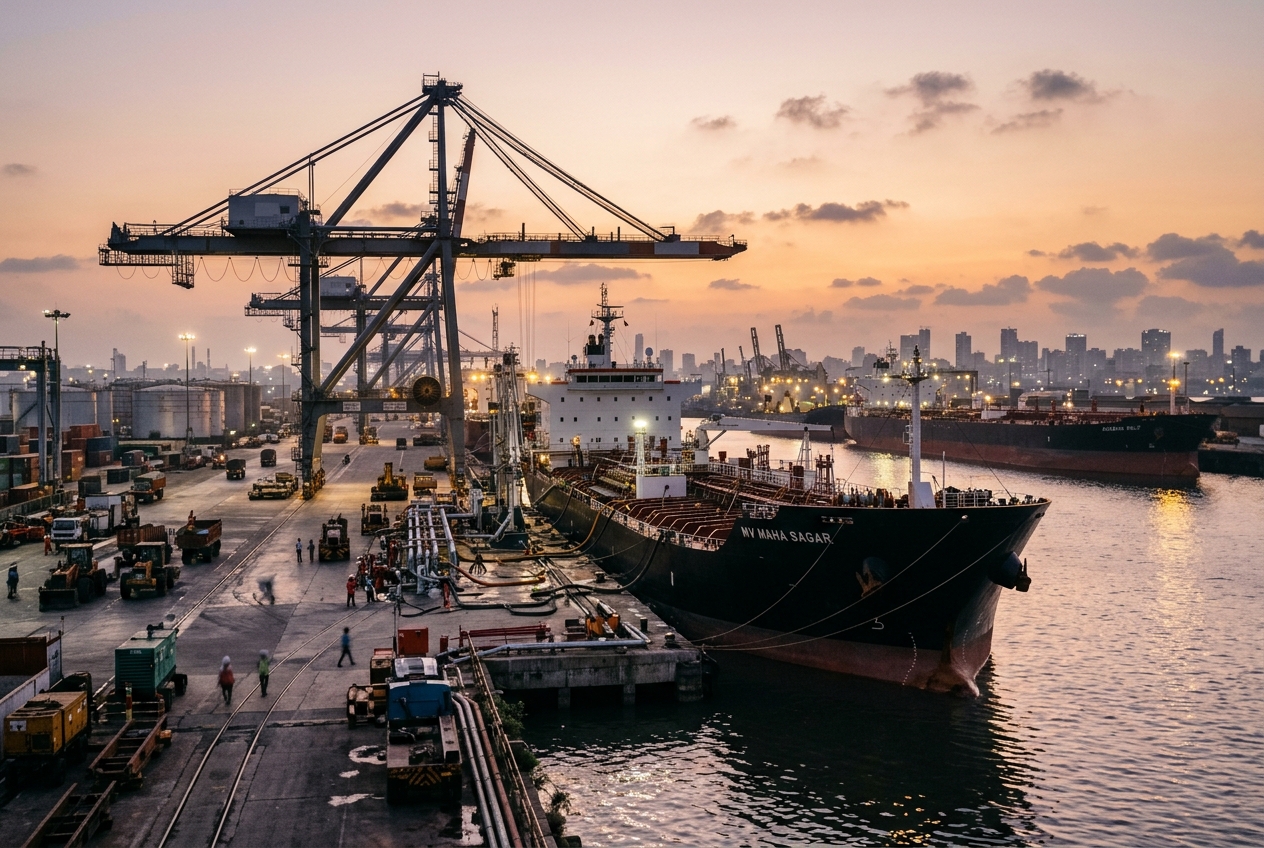
Projections presented by a GAPKI advisory board member put Indonesian palm product exports at 29.73 million tonnes in 2027, about 4.2 million tonnes below the 2026 estimate. Crude palm oil and processed products account for most of the fall, dropping to 23.81 million tonnes from 26.65 million tonnes. Oleochemical exports are forecast to fall 20% to 4.46 million tonnes.
Two forces drive it.
The first is weather. Combined CPO and palm kernel oil output is projected at 59.87 million tonnes in 2027, down 3.1% from 61.80 million tonnes this year. GAPKI estimates the El Niño that began around August 2026 could remove about 3 million tonnes of potential 2027 output, with a further loss of roughly 1.2 million tonnes in 2028. Palm responds to drought with a lag of many months, so dry weather now shows up in fruit bunches well into next year. Some growers have also delayed fertiliser applications, which stretches the damage beyond a single season.
The second is policy. B50, in force since 1 July 2026, is the biggest single domestic claim on Indonesia's crop. Biodiesel use is projected at 17.40 million tonnes in 2027, up 18.45% from 14.69 million tonnes. Total domestic consumption rises to 30.20 million tonnes from 27.12 million tonnes.
Put those two figures side by side and the headline writes itself: at 30.20 million tonnes of home use against 29.73 million tonnes of exports, Indonesia would consume more palm oil than it ships abroad for the first time. That is a turning point for a country that supplies more than half of the world's palm oil.
The global supply hole
International forecasters at the conference broadly agreed. Estimates for the fall in world palm oil production in 2027 ranged from about 2.5 million to 3.2 million tonnes, with Indonesia the largest contributor, and one veteran analyst called his own figure conservative. Forecasts for global palm exports showed a decline of 2.5 to 3.5 million tonnes.
The soft oils cannot easily fill the gap. Analysts estimate that Black Sea disruptions are cutting sunflower oil exports by 250,000 to 300,000 tonnes a month, and that only part of Ukrainian and Russian output can reach world markets. Meanwhile, energy demand keeps growing: one presenter projected world biodiesel consumption up about 4 million tonnes, against roughly 2 million tonnes of extra food demand. Global vegetable oil production growth in 2026/27 is seen below 4 million tonnes.
When supply growth undershoots combined food and fuel demand, stocks fall. One forecaster was blunt about the consequence: inventories will shrink through 2026/27, and prices will have to rise to ration demand.
What prices could do
Forecasts presented at IPOC included a Bursa third-month range of 4,500–5,000 ringgit a tonne through April 2027, with scope to break higher in the second and third quarters. Another outlook saw Malaysian palm reaching about $1,300 a tonne in the first half of 2027, within a $1,000–1,400 band over the next two to three years.
The forward curve already hints at this. On 13 November, Bursa contracts for May–July 2027 traded around 4,711–4,748 ringgit, well above the nearby months, before rolling lower into late 2027. That shape tells you the market expects tightness to peak mid-year.
Some caution is warranted. The bullish case leans on El Niño following its historical script, on B50 staying at full strength if crude oil falls, and on Indonesia not adjusting its blend to protect export revenue. GAPKI itself has argued for a flexible biodiesel policy. A softer crude market, which pushed palm lower this week, would raise the subsidy cost of B50 and make that flexibility more likely.
The single gate adds friction
Policy risk does not stop with biodiesel. From 1 January 2027, a state-owned entity becomes the sole export intermediary for strategic commodities including palm oil. Indonesia's trade minister said on 10 November that exporters will still negotiate directly with buyers and that procedures will largely stay the same. Buyers will want to see that in practice. Any delay in contract clearance during the first quarter, when supply is already shrinking, would add to the premium.
The India angle
India imported 8.23 million tonnes of palm oil in 2025-26 and depends on Indonesia for a large share of it. Indian refiners entered November with 2.31 million tonnes of stocks, enough to slow buying for a few weeks and exploit Malaysia's current overhang. That window closes as 2027 approaches.
The rational response is to book more cover for the first quarter while prices are soft and to shift more demand to soyoil, where South American supply is ample. Expect the palm-soy spread to become the key variable for Indian purchase decisions through mid-2027.
This is market analysis, not investment advice.
GLOBOIL India. Indonesia's 2027 policy shifts were already on the table at GLOBOIL India 2026, the 29th edition of the world's leading edible oil and agri-trade conference, held from 29 September to 1 October 2026 at The Westin Mumbai Powai Lake. Indonesia's palm industry used the conference's palm oil session to brief Indian buyers on the single-gate export system and the full B50 rollout, months before the Bali numbers confirmed how much less palm may be left to export. For anyone trading the palm-soy spread, GLOBOIL is where that argument happens face to face.