Tanks Full, Prices Falling
TL;DR: Malaysian palm oil inventories are expected to hit a record of about 3.76 million tonnes at end-October, and Bursa Malaysia futures have fallen to a 25-week low near 4,440 ringgit. India's heavy October buying, helped by a September duty cut, is the main demand support in a market that otherwise has too much oil.
Malaysian palm oil futures slid for a fourth straight session on Thursday, with the benchmark January contract down 56 ringgit, or 1.25%, at 4,440 ringgit ($1,093) a tonne in early trade. That is close to the lowest level in 25 weeks. Two days earlier the same contract closed at 4,552 ringgit, its weakest finish since 7 October, after shedding 2.09% in a single session.
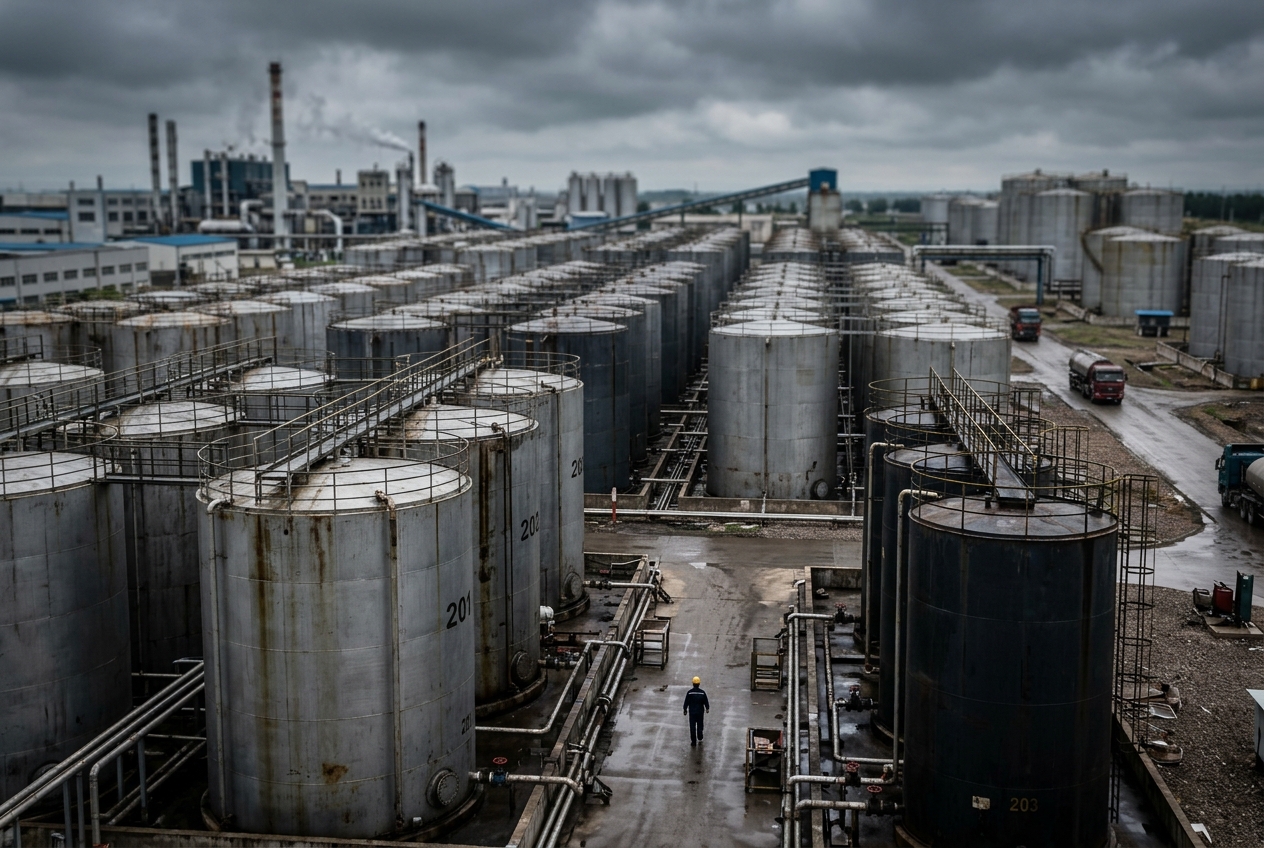
The reason is sitting in storage tanks. A survey of 11 estimates put end-October stocks at a median of 3.76 million tonnes, up about 7% on the month and roughly 50% above a year ago. If official figures confirm it, that would be a fresh record, topping September's.
Why the stockpile keeps growing even as exports jump
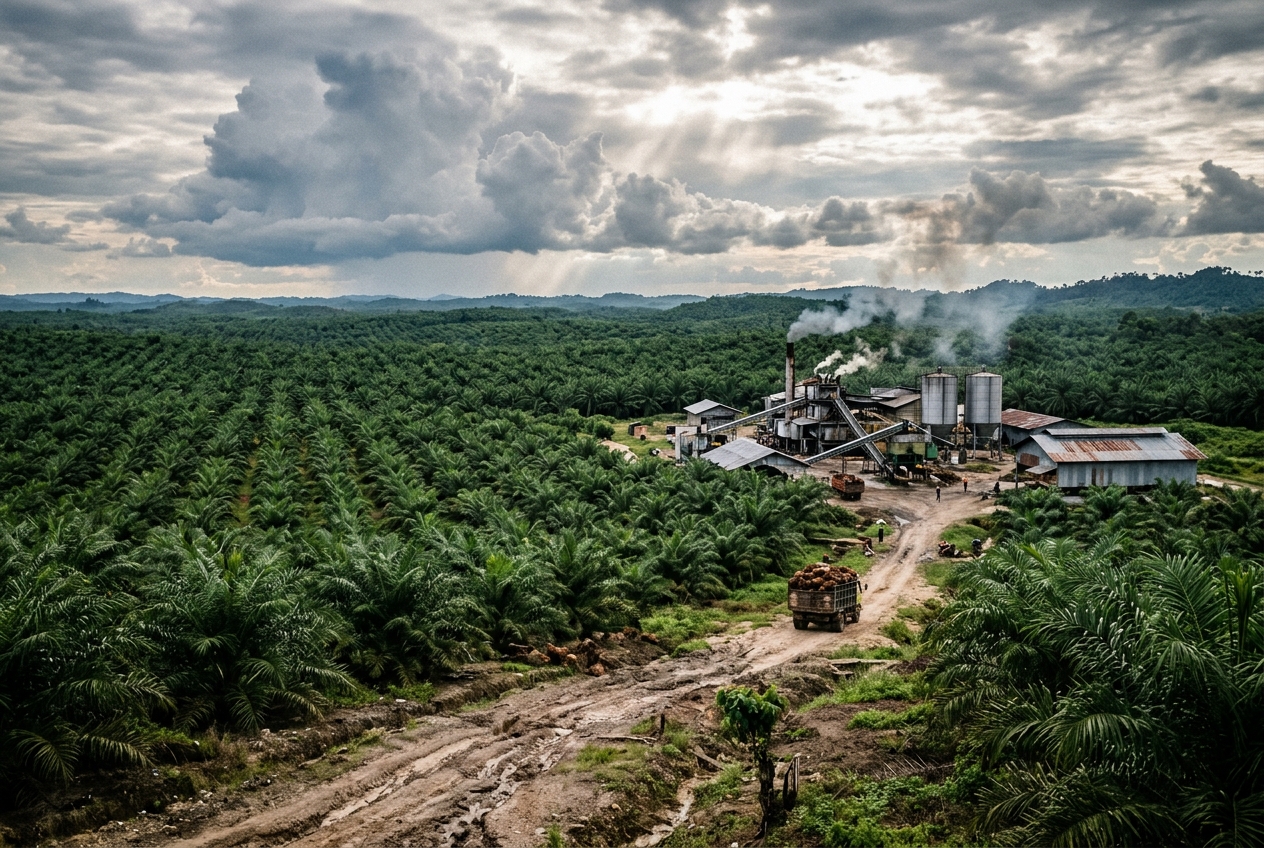
Output is the problem, not demand. Crude palm oil production is estimated at a record 2.2 million tonnes in October, the fifth monthly rise in a row, after September's 17% jump. Producers' association officials link part of the crop to replanted areas coming into maturity, and the group's chief executive has said full-year output could match or beat the 20.28 million tonnes of 2025.
Exports did their best. The same survey has October shipments up 43% to 1.6 million tonnes, the biggest monthly gain in eight years, and cargo surveyor data separately showed double-digit month-on-month growth. Even so, stocks rose. Storage is reportedly stretched in parts of the country, which is the kind of physical pressure that tends to force sellers to cut prices to move cargo.
Outside the palm market, rival oils are also soft. Dalian soyoil lost 1.38% and Dalian palm 0.99% on Tuesday, and crude oil has been moving on headlines about the US-Iran conflict, with a pullback this week on hopes of lower escalation risk. Cheaper crude weakens the biodiesel pull on palm. The ringgit's slight weakness against the dollar offered only marginal help.
India is the demand story
India's own numbers explain why the price fall has not been worse. Industry data show total edible oil imports of 1.74 million tonnes in October, up 13% from September. Palm oil arrivals were 866,000 tonnes, the most since August 2025. Soyoil reached a record 653,000 tonnes, and sunflower oil recovered to 223,000 tonnes.
Several things pushed refiners to buy early. Prices had eased, Diwali demand was approaching, and traders were worried about tighter domestic supply after weather damaged oilseed output. The September 24 duty cut mattered too. The basic duty on crude palm and crude soybean oil was halved from 10% to 5%, bringing the effective rate from 16.5% to 11%. Crude sunflower oil went to zero basic duty, an effective 5.5%. Refined oils still carry a 19.25-point premium over crude, a gap designed to protect domestic refiners.
Dealers expect palm arrivals to stay firm in November while palm trades at a discount to competing oils. That is a useful floor, but it is not a large one. Indian refiners have now front-loaded a good deal of their festival requirement, and the post-Diwali months are usually quieter.
What to watch next
Official Malaysian stock, production and export data are due early next week and will confirm or correct the survey. A figure above 3.76 million tonnes would deepen the bearish case; a smaller build would suggest exports are finally biting.
The longer-run counterweight is weather. Analysts expect inventories to stay heavy until at least the first quarter of 2027, before dry conditions linked to El Niño begin to trim output. Indonesia's expanded biodiesel mandate and the El Niño risk have kept futures about 14% higher year to date, even after the roughly 8% drop from the August peak.
For Indian importers, the analysis is straightforward. Palm is cheap relative to alternatives and duty is lower. Buyers who are covered through December have little reason to rush. Those who are not may find that Malaysian sellers, with full tanks, are more flexible on price than they were a month ago. This is market analysis, not investment advice.
Meet the market at GLOBOIL India 2026
Swings like this are exactly what the trade debates face to face. GLOBOIL India 2026, the 29th edition of the world's leading edible oil and agri-trade conference, runs from 29 September to 1 October 2026 at The Westin Mumbai Powai Lake, Mumbai. Expect producers, refiners and buyers to compare notes on palm supply, Indian duty policy and what a full Malaysian tank means for next year's import plans. Register early at GLOBOIL India.