Malaysia's Palm Stocks Are Heading for a Record, and Budget Day Offered No Relief
TL;DR: A Reuters survey expects Malaysian palm oil inventories at end-September to exceed the December 2018 record, after August stocks already jumped 7.5%. Budget 2027, tabled on 9 October, offered replanting support but no export duty waiver, so Malaysian oil stays at a pricing disadvantage to Indonesian supply just as India's import duty cut is pulling in buyers.
A stock build with no obvious brake
Malaysian palm oil futures closed the week on 9 October at 4,592 ringgit per tonne for the benchmark contract, down 1.48% on the day but up 1.26% over the week. That was the first weekly gain in three weeks, and it was a modest one. The reason for caution is sitting in warehouses.
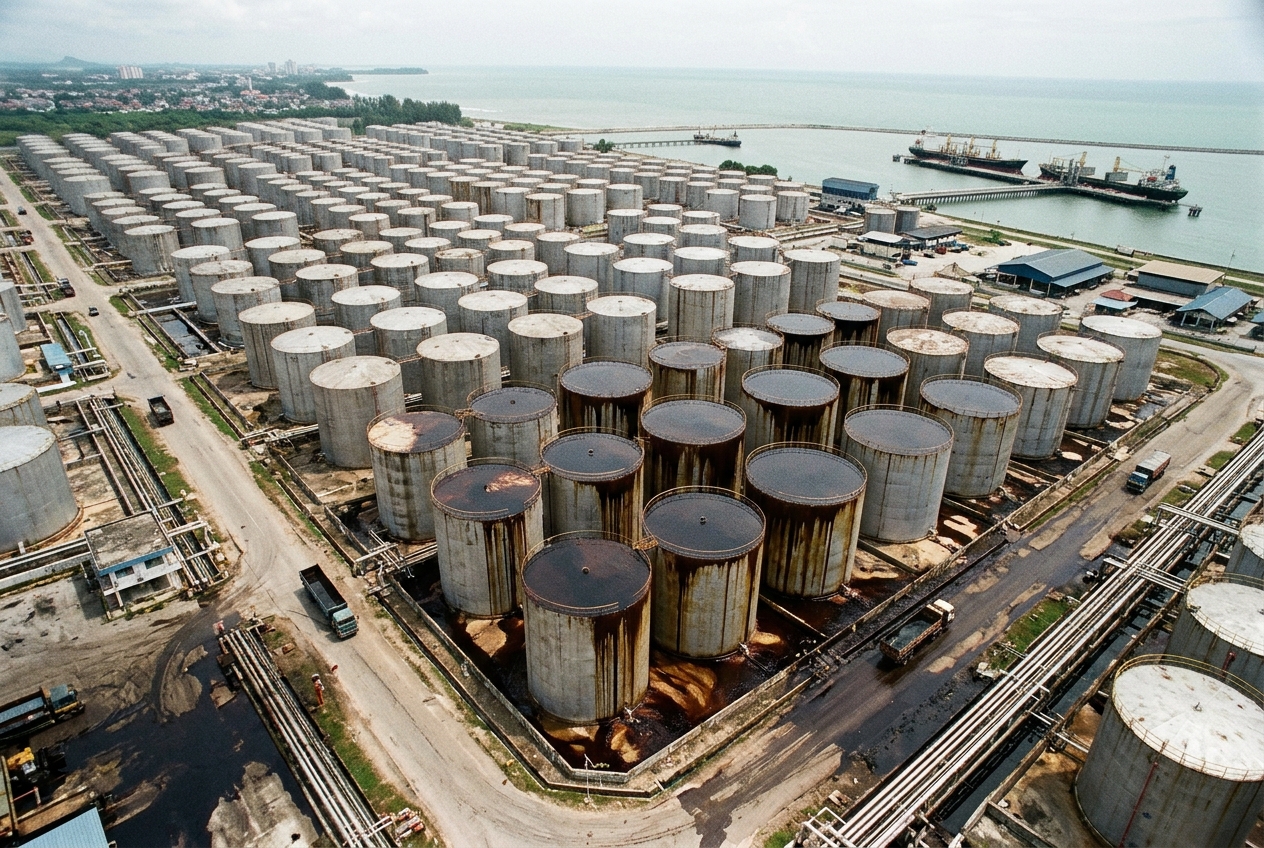
MPOB data showed total palm oil stocks at 2.82 million tonnes at the end of August, up 7.48% from July. The crude component is the sharper signal: crude palm oil stocks rose 15.2% to 1.64 million tonnes. Production was 1.81 million tonnes, up 1.39%, while exports fell 7.5% to 1.29 million tonnes. When output rises and shipments fall in the same month, stocks have only one direction to go.
A Reuters survey now expects September inventories to set an all-time high, passing the peak recorded in December 2018. The survey attributes this to record production running ahead of weak export demand. Palm normally builds stock at this point in the seasonal cycle, so a rise is not surprising. A record is another matter, because it means the usual autumn export pickup has not arrived in sufficient volume.
Budget day disappointed the trade
Traders had hoped Budget 2027 would waive the export duty on crude palm oil, which would have narrowed the price gap between Malaysian and Indonesian cargoes. The budget, tabled on 9 October, instead concentrated on support for smallholder replanting. That is useful for long-run yields, but it does nothing for this quarter's competitiveness.
The market reaction was visible. Prices that had been drifting higher earlier in the session gave back ground into the close. Crude oil also weakened after a US statement that it would not attack Iran before the November elections, easing the supply-risk premium and lowering the appeal of palm as a biodiesel feedstock. A slightly firmer ringgit added a small extra drag on foreign buyers.
Not everything was bearish. Dalian palm and soyoil and Chicago soyoil all rose on the day, which shows that the wider vegetable oil complex is firm. Palm is being held up by its neighbours more than by its own fundamentals.
What Monday's MPOB report has to show
The September MPOB figures are due on Monday, 12 October. The trade is looking for three things: whether the stock number confirms the record forecast, whether production has started to ease from its peak, and whether September exports improved at all. A stock figure in line with the survey would be absorbed. A figure well above it would put pressure on the nearby contracts, and a surprise export recovery would argue that the build is close to its top.
Analysts also note that export taxation is now the main lever Malaysia has left to pull. With no waiver in the budget, any relief would have to come through the monthly reference price mechanism, which tracks the market rather than leading it.
The India angle
India is the swing buyer for this inventory. On 24 September New Delhi cut basic customs duty on crude palm and crude soyoil from 10% to 5%, and on refined palm and soyoil from 32.5% to 27.5%, ahead of the festival season and with food inflation rising. Reports in early October pointed to stepped-up Indian buying of palm after the cut, though cargo surveyor data had not yet confirmed volumes at the time of writing.
If that demand is real, it should show in the first-half October export numbers. If it is mostly Indonesian and Malaysian discounting to win the business, then Indian refiners get cheaper cargoes without Malaysia clearing much stock. For Indian importers the practical point is that sellers are holding a large unsold inventory, which gives buyers room to negotiate on October-November shipment. Our view is that the near-term price risk is skewed to the downside unless exports show a clear lift, though a crude oil rebound or a weather shock could change that quickly. This is analysis, not investment advice.
Meet the market at GLOBOIL India 2026
Stock builds, duty changes and shifting buying patterns are exactly what the industry will be debating at GLOBOIL India 2026, the 29th edition of the world's leading edible oil and agri-trade conference, to be held from 29 September to 1 October 2026 at The Westin Mumbai Powai Lake, Mumbai. If you buy, refine or trade palm, this is where producers, importers and policymakers compare notes on the year ahead.