Full Tanks, Dry Skies: Palm Oil's Glut Arrives Before the Drought Does
Key takeaway: Malaysian palm oil exports fell 24% month on month over 1–25 September and industry officials expect end-September stocks to exceed 3 million tonnes, a level reached only five times before. That overhang has pushed Kuala Lumpur futures to a seven-week low, while the supply hit from a strong El Niño is unlikely to show up in output before mid-2027.
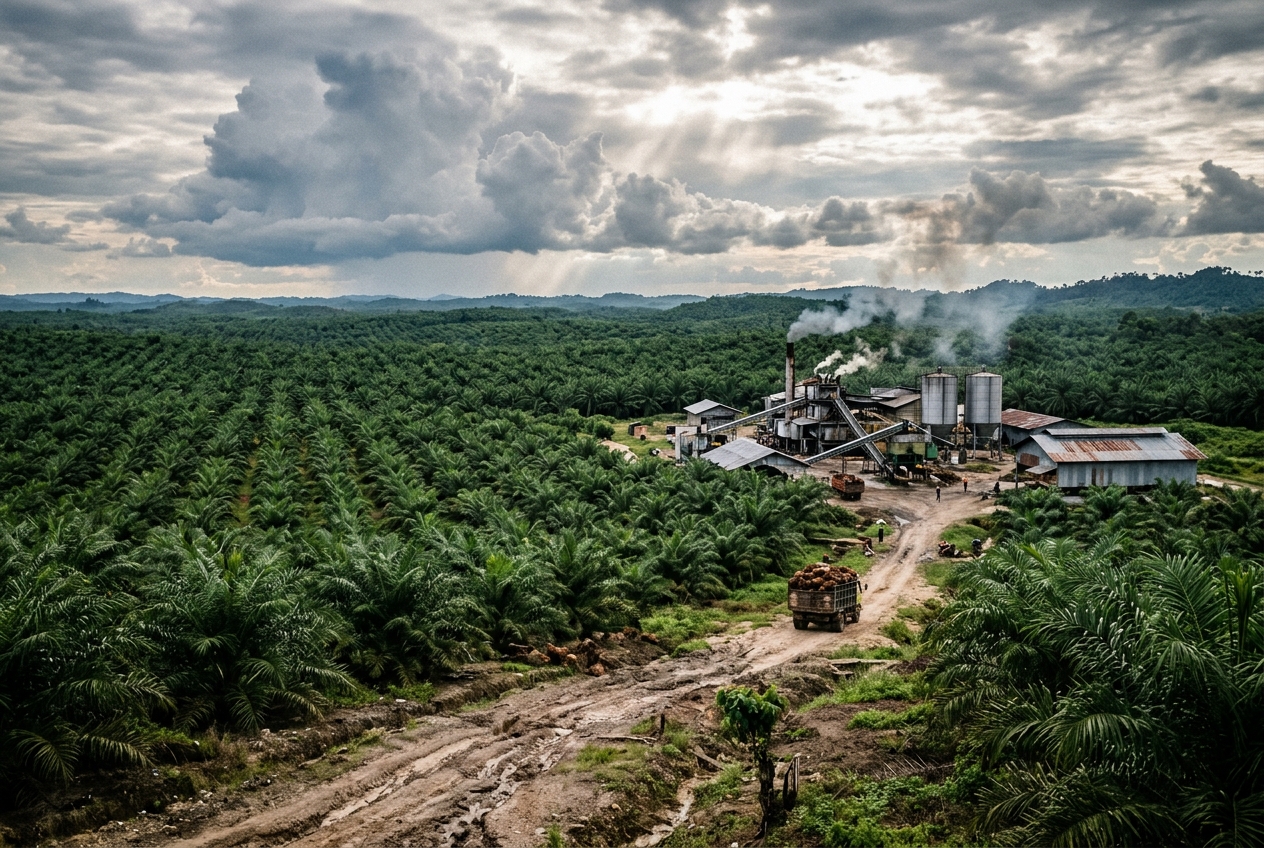
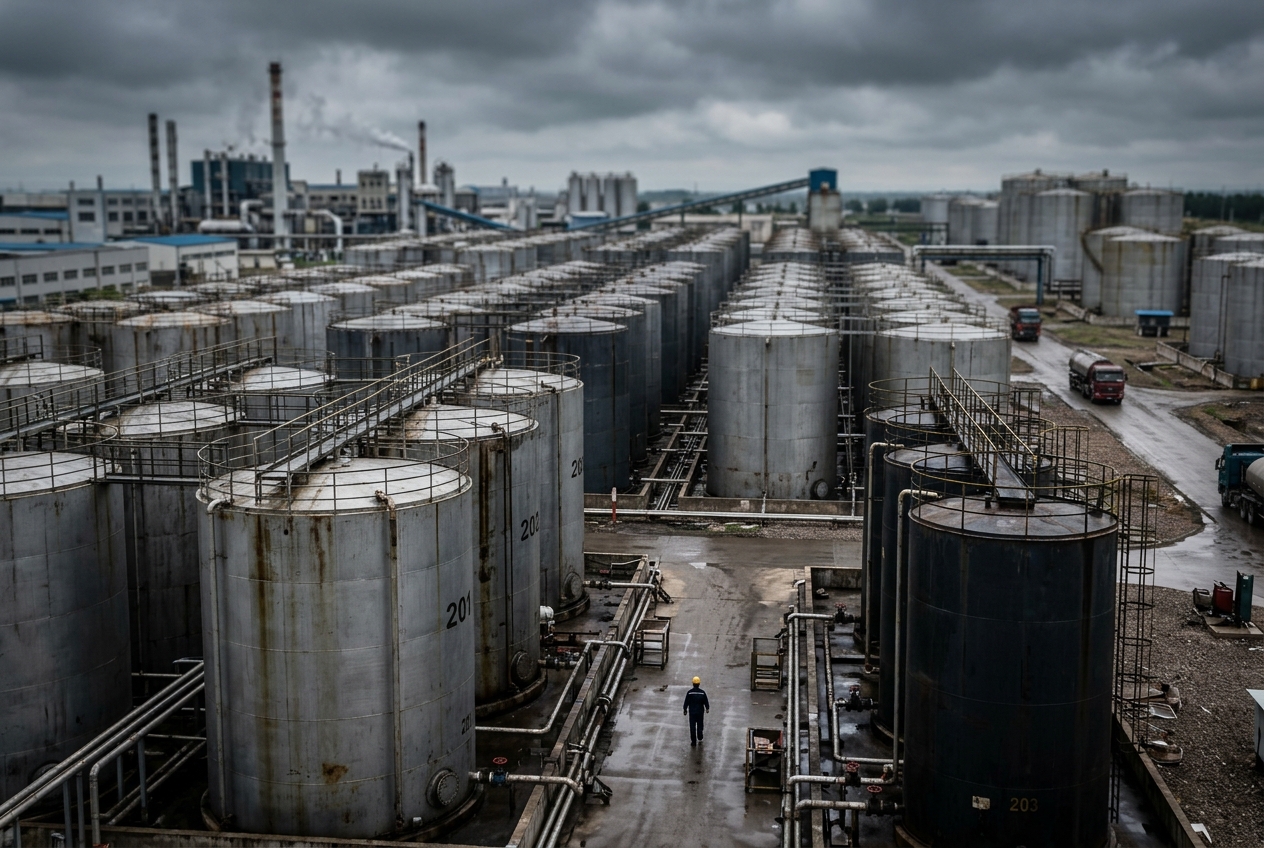
Palm oil has a timing problem. The weather story is bullish, but the tanks are full now, and the market is trading the tanks.
Benchmark futures in Kuala Lumpur slipped to about 4,750 ringgit a tonne intraday this week, the lowest since early August, and have spent the days since hovering just under 4,800. Prices are down a little over 1% on the month, although still about 8% above where they were a year ago.
The export numbers are the problem
Cargo surveyor data put Malaysian palm oil shipments for 1–25 September at roughly 763,200 tonnes, down 24% from about 1.01 million tonnes in the same stretch of August. The breakdown is telling. Crude palm oil and refined olein shipments held close to August levels, and palm stearin nearly halved, from about 109,300 tonnes to 64,100 tonnes. Those headline grades explain only part of a fall of almost 245,000 tonnes, which means much of the shortfall sits in the smaller product lines that surveyors do not itemise.
Official data already pointed this way. The Malaysian Palm Oil Board reported August exports down 7.5% to 1.29 million tonnes, while crude palm oil output edged up 1.4% to 1.81 million tonnes. End-August stocks rose 7.5% to 2.82 million tonnes, an eight-month high. Crude palm oil stocks alone jumped about 15% in a single month.
September is normally one of the heaviest production months of the year. With exports lagging and output still rising, industry officials now expect end-September inventories to break 3 million tonnes. The Malaysian Palm Oil Association attributes the build to slower exports meeting seasonally higher output.
Why 3 million tonnes matters
Malaysian stocks have topped 3 million tonnes only five times on record. The last time was December 2025, when futures sank to around 4,000 ringgit. Nobody is calling for a repeat of that slide yet, but the comparison explains why the market is nervous. Physical prices are already easing. Crude palm oil for October delivery in southern Malaysia was offered around 4,530 ringgit late last week, and refined olein for October shipment was quoted near $1,170 a tonne FOB, both lower on the day.
El Niño: real, but late
Meteorologists describe this year's El Niño as exceptionally strong, and Malaysia has had below-normal rainfall. None of that has hit the crop yet. Oil palms respond to moisture stress with a long lag, as drought affects flower formation that only turns into harvestable bunches many months later. Industry officials put the likely visible impact around mid-2027.
That gap sets up the next few months. Stocks should begin to ease from October as the seasonal production decline sets in, but the pace depends on buying from India and China. Some traders argue downside is now limited and that prices will turn quickly once output falls and exports recover. We think that call is reasonable on a six-to-nine-month view. On a six-to-nine-week view, the inventory figure is likely to set the tone.
India is not riding to the rescue
India, the largest buyer, bought aggressively in August, when palm imports rose 7% to about 782,800 tonnes, the highest since February. Traders expect that pace to slow from October. Palm's price discount to soybean and sunflower oil has narrowed, and Indian refiners have already been shifting toward soft oils.
New Delhi's duty cut on 24 September makes this worse for palm. Crude palm and crude soybean oil each received the same 5.5-point reduction in effective duty, while crude sunflower oil got an 11-point cut. Palm gained nothing relative to its closest competitor and lost ground to sunflower. The cut should lift India's total import volumes into the festive season, but palm's share of that basket is the part most at risk.
What to watch
- MPOB's September supply and demand report in the second week of October, and whether stocks print above 3 million tonnes.
- Early-October export estimates, especially shipments to India and China.
- The palm-soyoil price spread, which decides how much of India's festive demand goes to palm.
- Any sign that dry-weather stress is showing up early in Sabah or Indonesian output.
This article is market analysis, not investment advice.
GLOBOIL India 2026: When the world's second-largest palm oil producer is sitting on near-record stocks and its biggest customer is recalibrating its buying, the conversation between origin and destination matters more than ever. The 29th edition of GLOBOIL India, the world's leading edible oil and agri-trade conference, runs from 29 September to 1 October 2026 at The Westin Mumbai Powai Lake, Mumbai. Palm exporters, Indian refiners and price analysts will be debating exactly this question: how fast the stock overhang clears, and when El Niño starts to bite. Join us in Mumbai to hear it first-hand.