Soyoil's Policy Premium Is Leaking Out
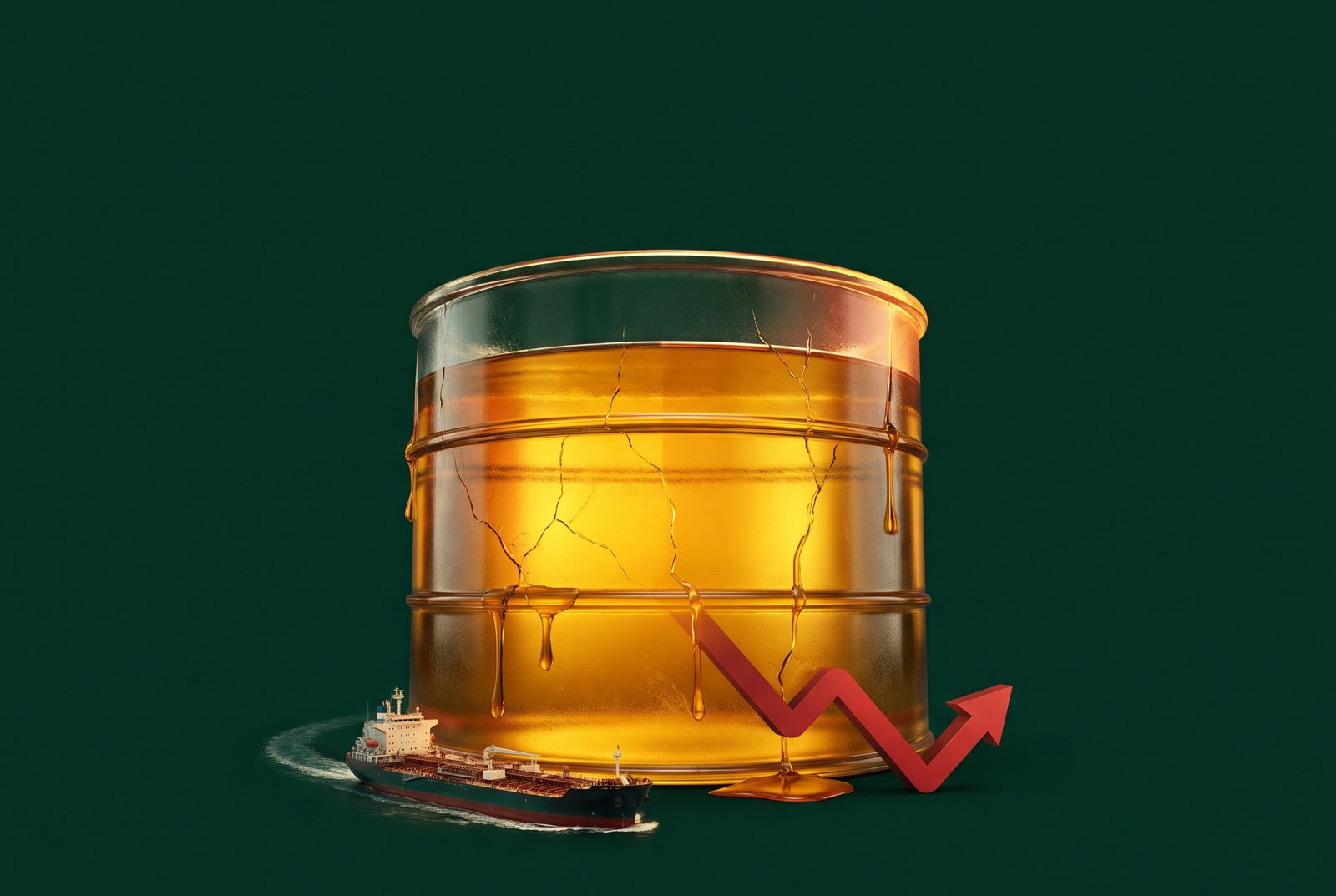
Key takeaway: December CBOT soybean oil traded near 58.8 cents a pound on 24 November, less than 3 cents above its 200-week moving average, after D4 RIN futures fell about 7% in a session. A pending state request to waive part of the 2027 US biofuel mandate is the main risk to the policy-driven demand that has propped up soyoil, and a weaker US price would flow through to cheaper Argentine and Brazilian cargoes for India.
The numbers behind the slide
On Monday, 23 November, and into Tuesday, the market that prices US biofuel compliance took a hit. December 2026 D4 RIN futures, the credits that biodiesel and renewable diesel producers earn and refiners must buy, fell 6.8% to about $1.885. The December 2027 contract dropped 7.5% to roughly $1.81.
Diesel weakened at the same time. December ultra-low sulphur diesel on NYMEX settled near $3.70 a gallon on Monday, down more than 22 cents, or 5.7%, in a single session. The heating oil crack, a rough gauge of refining margins, narrowed to around $74 a barrel. Together, cheaper diesel and cheaper credits squeeze what renewable diesel producers can afford to pay for vegetable oil feedstock.
December CBOT soybean oil touched an intraday low of 58.70 cents per pound on Tuesday and stayed under pressure through the session. It fell again on Wednesday, down about 1% by the Asian midday. Its 200-week moving average sits at about 56 cents. That level marks the multi-year uptrend built on biofuel demand. Market commentators warn that a decisive break would leave little chart support until the low 50s or high 40s, though that is a technical view and should not be read as a forecast.
Where the policy risk sits
The pressure goes back to Washington. The governors of Alabama and Louisiana have petitioned the US Environmental Protection Agency for a partial waiver of 2027 Renewable Fuel Standard obligations for fuel produced or consumed in their states. They argue compliance costs are pushing up pump prices and causing severe economic harm. To grant it, the agency must make that "severe economic harm" finding after a public comment process. The bar is high, and ethanol groups have urged the EPA to reject the request.
Even a request that fails can still move prices while it is pending. Uncertainty over 2027 obligations sits on top of other unresolved questions. The agency granted 2025 small refinery exemptions in August that removed more volume than the market expected. In October it proposed two ways to make that volume up: split it evenly across 2026 and 2027, or load all of it onto 2027. A 2027 obligation that might be both raised by reallocation and cut by state waivers is hard to price, and traders are marking it down.
The EPA has also missed its 1 November statutory deadline to finalise 2028 volumes. Industry groups say a separate waiver proceeding could delay that rule further. For crush margins, a longer stretch without a clear forward mandate means less certainty about who will buy the oil.
What is still supporting demand
The bull case has not vanished. US biodiesel output has rebounded this year on firmer RFS volumes and the 45Z clean fuel production credit, which only rewards feedstocks grown or produced in the US, Canada or Mexico. That rule favours domestic soyoil over imported used cooking oil and tallow, and it has drawn fresh investment into crushing capacity. The point is that the demand is real but heavily policy-dependent. When the policy outlook clouds, soyoil's premium over palm and over world prices is the first thing to compress.
The India connection
India has the most direct exposure outside the US. The Solvent Extractors' Association of India reports record soyoil imports of 5.84 million tonnes in the 2025/26 oil year, up 6.7%, giving soyoil a 34.5% share of all edible oil imports. October alone brought in a record 660,518 tonnes. Argentina supplied about 3.1 million tonnes over the season and Brazil around 1.41 million.
US soyoil rarely reaches Indian ports, but it sets the tone for South American export pricing. If Chicago loses its biofuel premium, Argentine and Brazilian crushers face a softer global benchmark just as the South American harvest approaches. Brazil's 2026/27 soybean planting was about 86% complete by late November. Indian soyoil landed at about $1,319 a tonne CIF in October, roughly $77 above palm. A narrower US premium would make that spread easier to close and could keep Indian refiners booking soyoil heavily into the first quarter of 2027.
There is a catch for Indian farmers. Cheaper imported soyoil caps domestic seed prices during the kharif marketing season and makes it harder to argue against the current duty structure. Policymakers will watch landed costs closely.
What to watch
The next signals are the EPA's handling of the state waiver petition, the final reallocation decision on 2025 exemptions, and any timeline for 2028 volumes. On the market side, a weekly close below 56 cents in CBOT soyoil would confirm that the policy premium is unwinding. A firm EPA rejection of the waiver, by contrast, would likely trigger a fast short-covering rally in both RINs and soyoil.
This is market analysis, not investment advice.
GLOBOIL India 2027 — 30th Edition, Mumbai
A rule-making in Washington can reprice a soyoil cargo bound for Kandla. GLOBOIL India returns for its 30th edition from 22–24 September 2027 at The Westin Mumbai Powai Lake, the world's leading edible oil and agri-trade conference, where crushers, biofuel buyers, South American exporters and Indian refiners meet to work out where policy and price are heading next. Save the date.