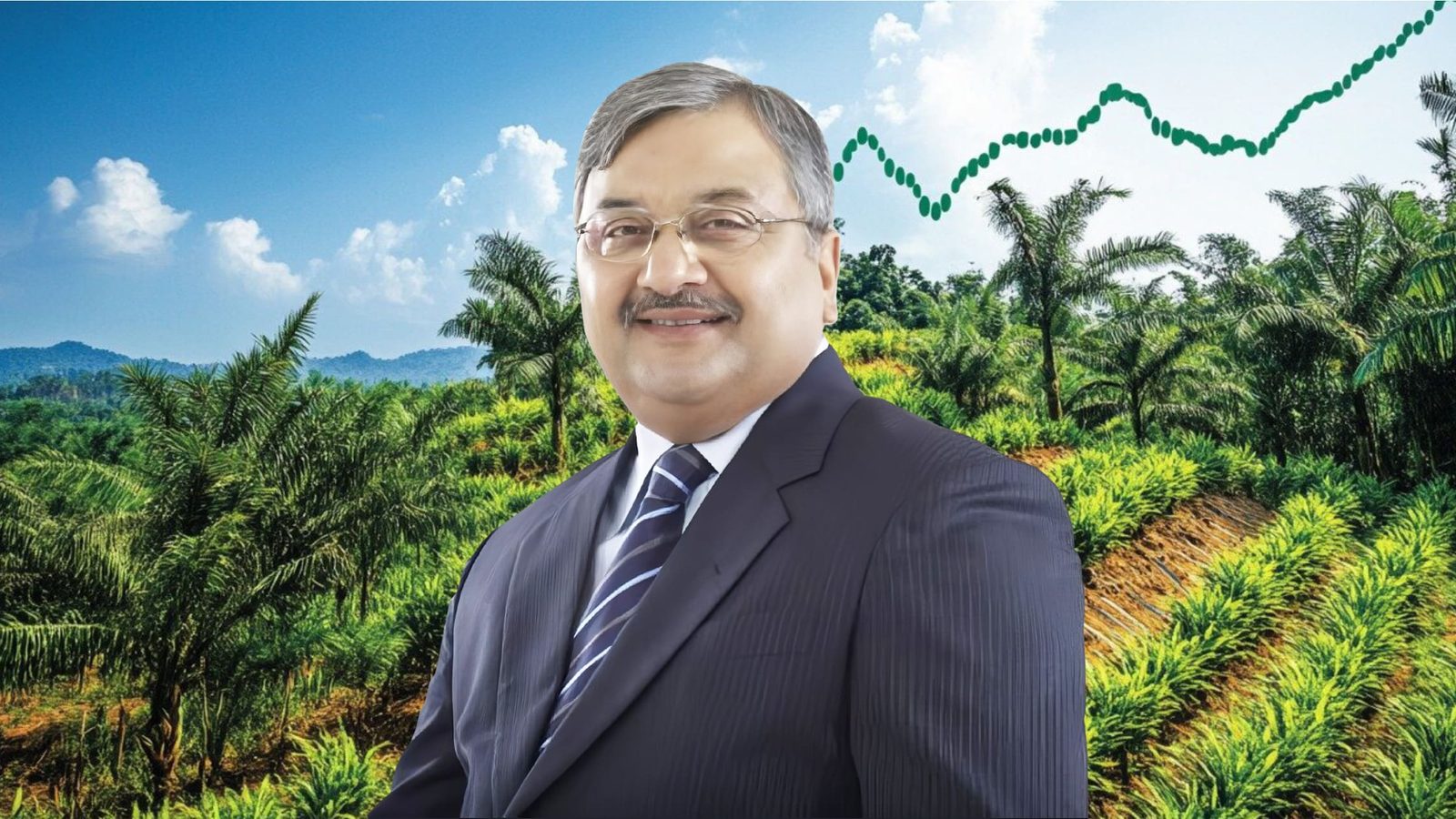
Navigating the Future of Agri Trade: A Deep Dive into Sustainability, Technology, and Global Policies with Sanjeev Asthana
Sustainable Shifts in Edible Oil Production
- In recent years, there has been a significant shift towards sustainable sourcing and production in the edible oil industry. How do you see this trend evolving in 2023, and what are its implications for producers and consumers alike? *
Owing to the rising environmental concerns and awareness among the consumers as well the producers, the sustainable sourcing and production has become the focus of the Agri trade industry, including the edible oil industry. In recent years, we see the success of various certifying organizations like RSPO, CRS, RTRS, etc., in bringing a shift towards responsible sourcing and production. If we look at memberships for such certifications, they have been increasing year on year. This includes growers, producers, as well as processors and traders. An RSPO report mentions that total global certified area under production of Certified Sustainable Palm Oil (CSPO) has increased to 4.5 million ha over 21 countries by 2022, with CSPO production increasing by nearly 900,000 MT in 2021 with a year-on-year growth of ~6%.
At the other end, the consumption of CSPO through consumer and retail products has increased over previous year by approximately 914,000 MT in 2021 with a year-on-year growth of 12%. Here is an important point to understand that demand for CSPO is increasing at a higher growth rate (nearly double), as compared to its production. This points to the increasing consumer preference for products made from sustainably sourced ingredients. This is true for other edible oils as well, and not just palm oil, and as we move forward, the trend is going to gain further momentum.
The increasing shift to sustainably sourced edible oils has positive implications for consumers. It fulfils their aspirations for environmentally responsible consumption, raising awareness of sustainable practices. As consumer awareness and purchasing power grow, companies may adopt sustainability faster. Governments can enforce sustainable oil regulations, boosting consumer confidence. However, sustainable products currently command a premium in global and domestic markets due to their production costs. In countries like India, only high-income groups are willing to pay this premium, limiting accessibility to the broader population. As per one BCG survey done last year, the Indian consumers are least likely to be willing to pay a premium for sustainable options (1% vs 5% globally).
The shift to sustainable sourcing and production of edible oils compels producers to adopt sustainable practices due to market demand. They must invest in sustainable methods and technologies to meet these standards. Sustainability not only helps mitigate risks for producers by improving market access, but also in addressing climate challenges through biodiversity and resilient agriculture. In a competitive market, sustainability differentiates products and benefits producers. In near future, there can be regulatory mandates related to ESG to further push manufacturers and processors to seek sustainable sources for refined edible oils, further motivating producers to transition to sustainability.
With the focus on sustainability, while producers gain a competitive advantage in markets and improved climate resilience at the farm levels, the consumers will gain the right produce having lesser chemical residues, which is good for their health.
Digital Disruption in Agri Trade
*The Agri trade industry is undergoing rapid digital transformation. In the context of 2023, how do you perceive the integration of technology impacting the trade, distribution, and consumption patterns of edible oils? *
In current scenario, we see that trade, distribution and consumption patterns are highly interlinked to each other. Look at sustainability, since the consumption patterns have swung towards the sustainable products, the trade and distribution are increasingly becoming more and more aligned to the sustainable sourcing and production. Hence, we find some similarities across when we look at the impact of technology in trade, distribution, and consumption.
Across the agri value chain, technology integration is widespread. In agriculture, even in developing countries like India, technology adoption is increasing. India has over 2,300 active Agri-tech startups, offering solutions that span market prices, crop monitoring, advisory, input management, output market links, and carbon financing. The IoT and crop monitoring enhance production efficiency, boosting transparency, traceability, and sustainability. Farmers benefit with increased income. IoT technologies are also advancing quality assessment at collection and procurement points.
AI and Machine Learning are also revolutionizing the Agri trade industry. ChatGPT has been tested in agriculture applications, while AI and ML tools analyse commodity and stock charts. Leading market analytics firms are exploring AI's potential to enhance efficiency in analysis. This disruption allows traders and distributors to make data-driven decisions, leveraging algorithms to analyse market trends, demand patterns, and weather conditions for optimized inventory and distribution, reducing waste and hence, maximizing profits.
Blockchain boosts transparency and traceability in trade through decentralized ledgers and smart contracts. It's gaining ground in Agri trade too. It lets consumers and businesses trace oil origins, ensuring quality and authenticity, fostering trust, and streamlining trade. IoT devices track shipment conditions like temperature and humidity, preserving product quality during transport and minimizing spoilage.
Enhanced retail data visibility aids production and distribution planning. Integrating ‘Predictive Analytics’ enhances efficiency. As eCommerce and D2C sales channels grow, companies access valuable consumer preference and purchasing data. Consumers also seek comprehensive product information, including source and preparation methods. QR-based traceability is a recent trend, even in developing economies like India. Companies must adapt to tech advancements, especially with the tech-savvy youth population. Social Media and Influencer Marketing exemplify this trend, enabling precise digital outreach to a broad consumer base. India's increasing digital penetration, even in rural areas, provides abundant opportunities for companies to connect with consumers.
Technology will also enable the industry to address environmental, social, and governance (ESG) factors. Advanced data analytics can help in optimizing the resource usage in production and distribution, reducing waste and minimizing the carbon footprint. IoT sensors can track emissions and other sustainability metrics, aligning the industry with global sustainability goals.
To sum up, by leveraging these technologies, the Agri trade industry can unlock new avenues for growth, drive innovation, and navigate an ever-evolving global landscape.
Global Policies and the Agri Trade Industry
*Given your extensive involvement in policymaking and collaboration with international institutions, how do you envision the evolving global policies and regulations shaping the edible oil and Agri trade industry? *
Discussing policies, it's vital to grasp the influencing factors and their impact on people. Since the Agri trade sector is critical for any country due to its economic dependency, livelihood support for farmers and global food security, governments worldwide adjust policies proactively which results in a dynamic global policy landscape. These policies are chiefly influenced by two things: agro-climatic conditions which affects supplies, and the geopolitics.
Cropping seasons, production, and yields dictate commodity supply in trade channels. Countries adjust policies to favour domestic needs when faced with challenges. For example, in 2022, India restricted wheat exports due to a heat wave impact on the crop, ensuring domestic supply for public distribution schemes benefitting 800+ million people. Indonesia did the same with palm oil exports. Geopolitical events like the Russia-Ukraine conflict affected global prices, particularly for wheat and sunflower oil, as more than 25 countries heavily relied on these regions for wheat imports. In such situations, various trade regulations are also enacted for promotions or restrictions of the focus commodity.
To address Agro-climatic challenges, certain measures including proper risk management and trade planning, and suitable agricultural practices are being taken these days. Sustainability is on the rise, and future global policies are likely to promote climate resilience and agricultural sustainability. As mentioned earlier, we can also expect some regulations in the near future mandating a percentage of sustainably sourced imports or policies promoting certified produce. These will also emphasize traceability, and hence, accelerate ESG adoption in the edible oil and Agri trade industry. Policies will also adapt to changing consumer preferences for health, nutrition, transparency, and traceability.
In the current global trade landscape, trade plays a vital role in crisis adaptation. We see that countries are forming new agreements to navigate geopolitical uncertainties and exploring alternative policy options. An example is that of some countries challenging the dominance of the US Dollar in international trade. Trade pacts are being established through bilateral ties to secure stable supplies during crises, ensuring uninterrupted trade to protect food systems and vulnerable populations. Companies may opt for longer-term contracts to ensure a more stable supply chain. It is also worth considering that some governments can explore the options to build public stockholding for edible oils also, which may be helpful in managing the market volatilities.
Overall, it seems that global policies and regulations are moving towards greater decentralization, regionalization, sustainability and a balance in food and agricultural trade. And this is good for an inclusive growth, addressing the concerns of members across the Agri food value chains.