The $78 Question
TL;DR: Iran said over the weekend that a deal negotiated through Oman is in its "final stages," though it insists Washington must act before the Strait of Hormuz reopens, and it has floated bans and fines on vessels it deems hostile. Brent is holding near $78 a barrel on that uncertainty. That war premium in crude has quietly underwritten the vegetable oil rally all summer by keeping biodiesel economics attractive. If Hormuz reopens and crude retreats, the energy leg under palm and soyoil weakens — but it does not disappear, because blending mandates, not blending margins, now set the base load of demand.
Crude's war premium has been palm's quiet ally all summer — Iran now says a deal is in its "final stages"
Vegetable oil traders have spent the summer watching two screens. One shows Malaysian stocks and Indian imports. The other shows tankers, straits and missile headlines. The second screen has mattered more than most balance sheets admit.
The energy leg under the rally
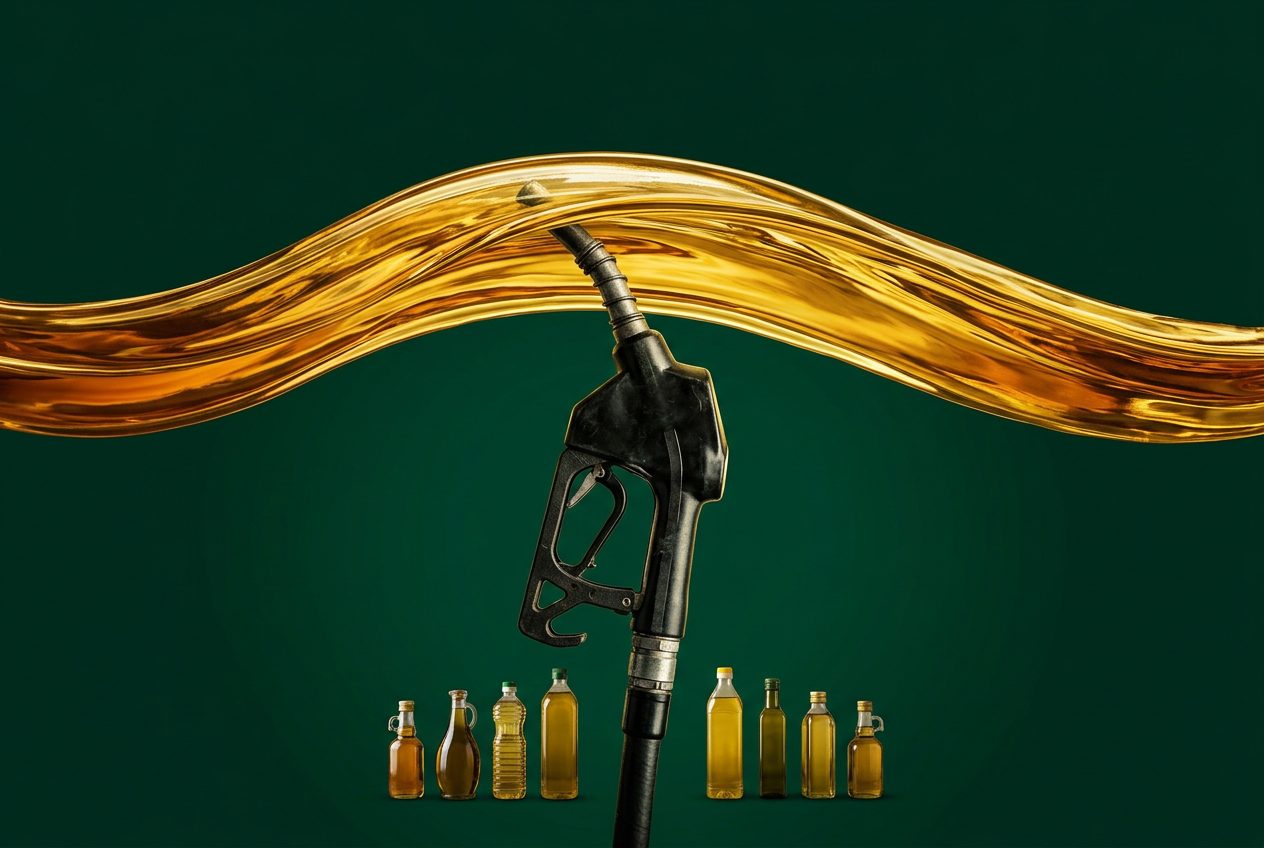
The mechanism is familiar but worth stating plainly. When crude rises, diesel rises, and every tonne of palm or soyoil converted into biodiesel becomes more valuable. Discretionary blenders blend more, mandated blenders lose less money, and governments funding subsidy programmes feel less fiscal pain. Stronger crude makes palm a more attractive biodiesel feedstock, and that link has been cited in almost every session report through this rally.
The war premium has done real work here. Concerns around the closure of the Strait of Hormuz, through which roughly a fifth of the world's oil moves, have kept Brent elevated near $78 even as talk of a peace deal advances. Palm's four-weekly-gains-in-five run, soyoil's strength on Chicago, the resilience of the whole complex into rising Malaysian stocks: all of it happened with an energy market priced for conflict.
What changed this weekend
Tehran's language shifted. Iranian officials said the arrangement negotiated through Oman is in its "final stages," while insisting the United States must take the first step and warning that Iran will not reopen the waterway unilaterally. Iran has also floated new rules under which vessels it deems hostile could face bans or fines, a reminder that reopening may come with conditions attached. The US president, for his part, said he believes the conflict will end "pretty soon."
Markets read this as progress with friction. Oil actually edged higher on the uncertainty late last week, because a deal in its final stages is still not a deal. But the direction of travel is clear enough that vegetable oil desks should be running the scenario now rather than the morning it happens.
The scenario: crude gives back the premium
Assume a reopening announcement knocks meaningful risk premium out of Brent over a few sessions. The first-order effect on vegetable oils is straightforwardly bearish: weaker gasoil, thinner discretionary blending margins, and an immediate sentiment hit to palm, which trades as the most energy-linked of the food oils. Expect the October Bursa contract to test the lower half of the RM4,400–4,700 band that the Malaysian Palm Oil Council has mapped for August.
The second-order story is more interesting. The base load of biodiesel demand no longer floats on crude. Indonesia's 50% blend is a legal mandate funded by export levies, not a margin trade. Brazil, the United States and the EU run mandate-driven programmes of their own. Mandated demand consumes the feedstock whether Brent is at $78 or $65; what changes is the fiscal cost to governments, not the tonnes. That is a structural difference from the 2018-era market, when a crude collapse could hollow out biodiesel demand almost entirely.
And the food-side bid does not move at all. India's festival-quarter imports, running at a 10-month high, are about pipelines and prices in rupees, not Brent. The Black Sea sunflower disruption pushing Indian buyers toward palm is a war story of a different war.
The setup, in plain terms
A Hormuz reopening would take the froth off vegetable oils, not the floor out from under them. The complex would lose its energy tailwind and rediscover its own fundamentals: heavy but seasonal Malaysian stocks, mandate-locked biodiesel offtake, and the strongest Indian import pull in nearly a year.
As analysis, not investment advice: a crude-led dip in palm into the RM4,400s would likely find willing Indian and levy-adjusted Indonesian buying beneath it. The trade to fear is not the reopening headline; it is being short the food story because you were watching the fuel story.
The convening point
Energy-versus-food is the defining tension of this edible oil cycle, and it headlines the agenda at GLOBOIL India 2026 — the 29th edition of the world's leading edible oil and agri-trade conference, 29 September – 1 October 2026 at The Westin Mumbai Powai Lake, Mumbai. Crude strategists, biodiesel policymakers and veg-oil traders on one stage, arguing about exactly this. Be in the room.