The Levy and the Blend: How Indonesia Is Shrinking the World's Spare Palm Oil
Indonesia produces roughly half the world's palm oil, so when it decides to burn more of that oil at home, every importer feels it. Two policies are pulling in the same direction this year, and both tighten what is left to export.
The blend
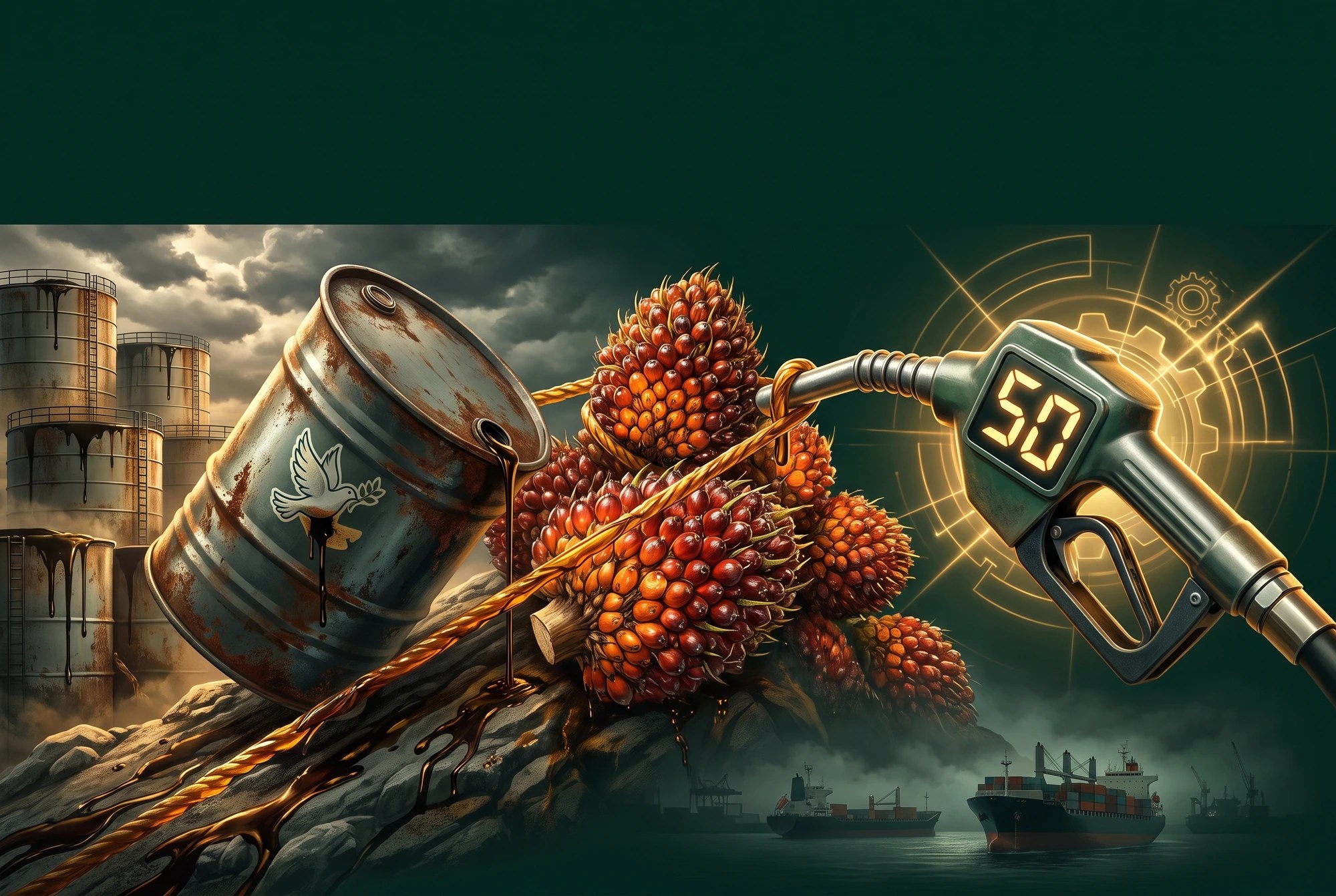
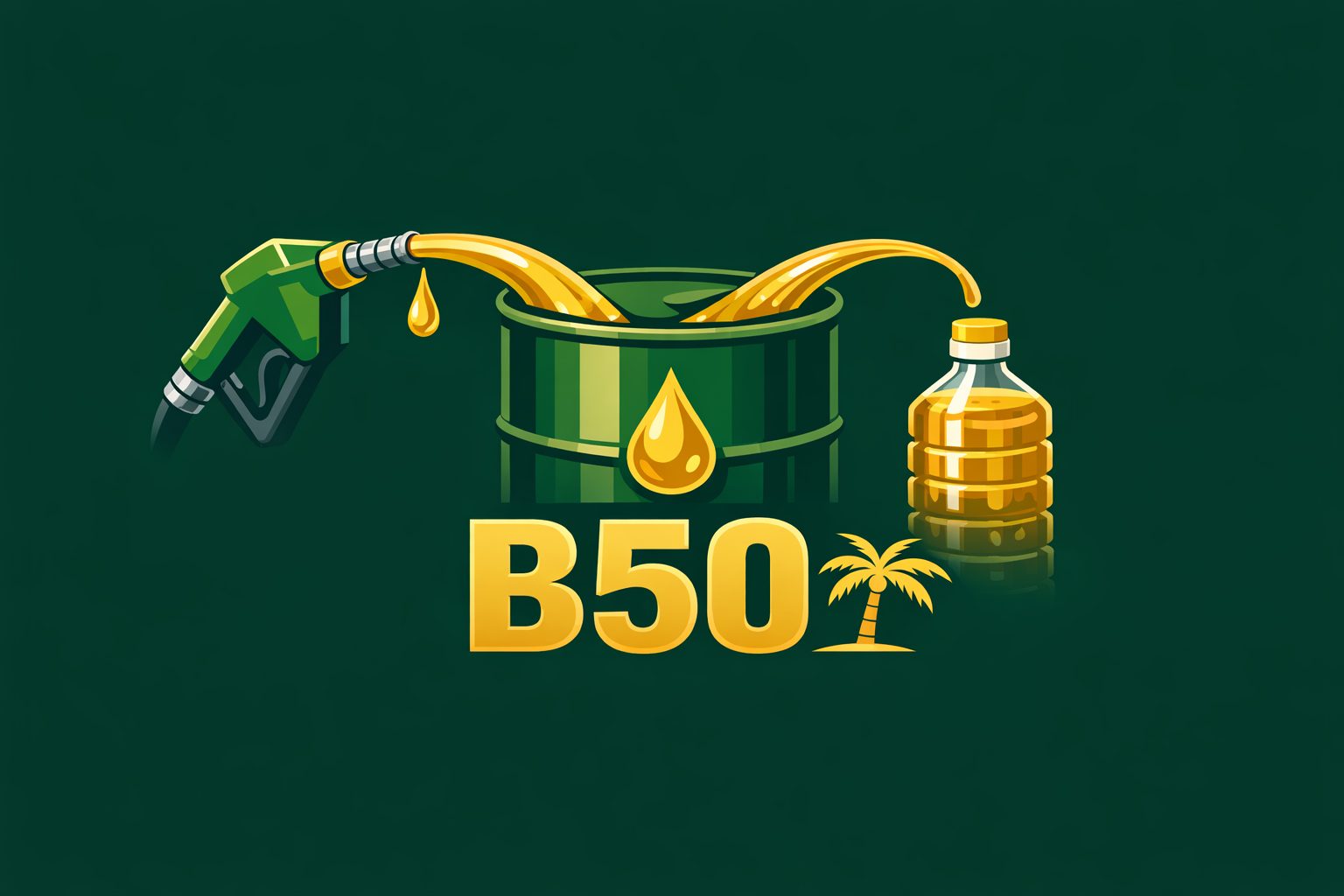
The first is the blend. From 1 July, Indonesia moves to B50, a diesel that is half palm-based biodiesel, up from the B40 mandate already in force. Retailers get a three-month window to clear old stock. The arithmetic is blunt: one estimate puts the extra palm demand from B50 at up to 4 million tonnes a year. Oil that goes into a fuel tank does not go onto a tanker.
The levy
The second is the levy. Jakarta raised the crude palm oil export levy through early 2026, lifting it into the low-teens in percentage terms, with the proceeds funding biodiesel subsidies and replanting. A higher levy makes exporting less attractive at the margin and keeps more oil inside the country. Put the two together and the exportable surplus shrinks even when the trees yield well.
The yield question
The trees may not yield as well as hoped. Output is forecast to rise only modestly, perhaps 1.5 to 2 million tonnes above 2024 levels. A government land program that has reclaimed millions of hectares tied to disputed plantation titles has put a slice of production at risk, with estimates running up to several million tonnes of crude palm oil caught in the uncertainty. Planters do not spend on fertiliser and replanting when they are unsure who holds the land.
Price action
Prices have been jumpy rather than soaring. Benchmark Malaysian futures traded near 4,560 to 4,600 ringgit a tonne in late June, slipping on profit-taking even as the demand story stayed firm. Forecasts for the year cluster around 4,250 to 4,400 ringgit, above where many traders started 2026. Export data lent support: cargo surveyors estimated Malaysian shipments rose around 11% in the first 25 days of June, a sign demand has not blinked at higher prices.
The India squeeze
For India, the largest palm buyer, the squeeze shows up directly. June palm imports were expected to top 600,000 tonnes, up from about 549,000 in May, as the discount to soft oils kept palm the cheapest calorie on the shelf. But cheap is relative. If Indonesia keeps diverting oil into B50, the floor under palm rises, and India's room to lean on it as the budget option narrows.
The longer game
There is a longer game here. Indonesia has been open that biodiesel is about energy security and its trade balance, not only farm incomes. Every litre of palm diesel burned at home is a litre of crude oil it does not import. That logic does not reverse when palm prices climb; if anything, expensive fossil fuel makes the blend look smarter. The structural read is that a growing share of Indonesian palm is being walled off from the food market for good.
What to watch
- Whether the B50 rollout holds to its July start or slips during the transition
- How the land-title overhang resolves
- Whether Malaysia, the other big exporter, picks up the slack or follows Indonesia in favouring domestic use
For importers used to treating palm as the cheap, always-available default, that assumption is worth retiring.
The convening point
The biodiesel-versus-food tug of war over palm is one of the defining trades of the decade, and it gets argued out in person at GLOBOIL India 2026. The 29th edition runs 29 September to 1 October at The Westin Mumbai Powai Lake, where the refiners and traders who price these cargoes meet the policymakers writing the mandates.