India Blinked First: June Imports Fell 30% as Biofuel Prices Bite
TL;DR: India imported 1.11 million tonnes of edible oil in June 2026, down about 30% year-on-year, with palm crashing to a 14-month low near 492,000 tonnes. The collapse is not weak appetite. It is a buyer stepping back because biofuel mandates abroad have erased palm's price advantage and driven landed costs beyond what refiners will pay.
June imports fell 30% as the world's biggest oil buyer got priced out of its own market.
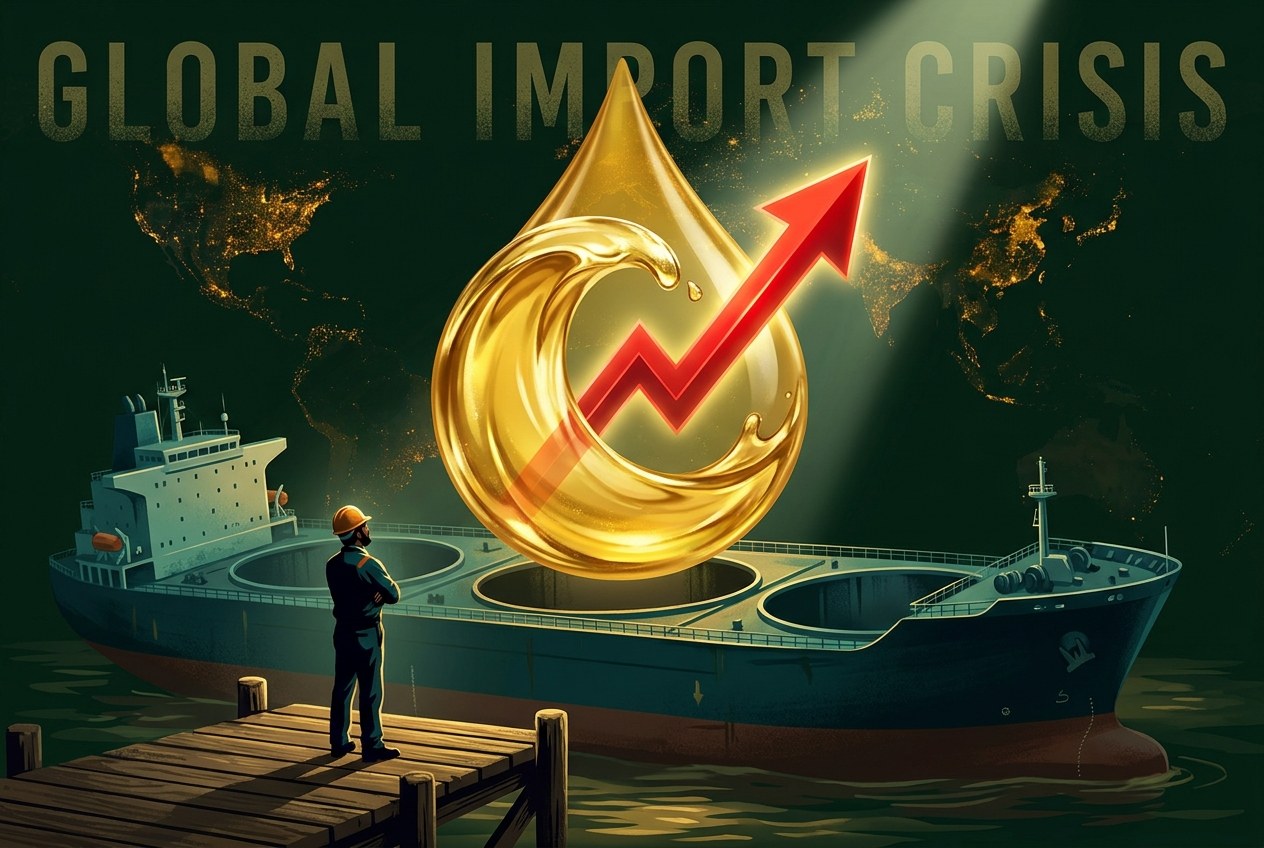
The June import numbers out of India read like a market casualty report. Total edible-oil arrivals fell to roughly 1.11 million tonnes, down close to 30% from the same month a year earlier and 16.6% below May, according to trade-body data. Every major oil retreated. Palm led the fall to about 492,000 tonnes, its weakest showing in fourteen months. Soyoil dropped near 23% on the month to around 381,000 tonnes. Sunflower oil slid to about 244,000 tonnes, a three-month low.
When all three legs of the import stool give way at once, it is rarely a demand problem inside India. Cooking-oil consumption in a country of 1.4 billion does not evaporate in thirty days. What changed was the price, and the willingness to pay it.
The vanishing discount
Palm oil earns its keep in India by being cheap. For decades the trade ran on a reliable spread: palm sat well below soyoil and sunflower, so refiners loaded up on it and passed the saving down the chain. That spread is the whole game. In June it disappeared.
Palm has been trading at a discount of under 50 dollars a tonne to soyoil, a gap so thin it removes the reason to prefer it. Strip out the price edge and palm becomes just another oil competing on merit against soft oils that many Indian consumers already favour. Refiners did the rational thing. They slowed palm purchases, leaned on existing stock and waited for a better number.
The cause of the compression sits offshore. Simultaneous biofuel mandates in Indonesia, Malaysia and the United States are pulling millions of tonnes of vegetable oil out of the food economy and into the fuel economy. Indonesia's move to a 50% palm-biodiesel blend from 1 July is the headline act, but American renewable-diesel demand for soyoil and firm European rapeseed absorption are pushing in the same direction. When fuel policy bids for the same barrel that a Mumbai refiner wants for a cooking-oil pack, the refiner is the one who walks.
What the FAO index confirms
The macro data tells the same story from above. The global vegetable-oil price benchmark averaged 192 points in June, up 3.8% on the month and 23.3% higher than a year ago. Palm and rapeseed led the climb, sunflower held broadly steady and only soyoil eased slightly. A benchmark up nearly a quarter year-on-year is the backdrop against which India's buyers were asked to keep importing at pace. They declined.
This is textbook demand destruction, and it has a predictable shape. High prices suppress purchases, stocks draw down, and the market builds tension until something gives. India's edible-oil inventories cannot coast indefinitely. Domestic crush of oilseeds covers only part of the shortfall, and the festival and wedding season that drives peak consumption is approaching. At some point refiners have to return to the import market whether prices have corrected or not.
The setup for the second half
That return is the story to watch. A buyer who sits out one month builds a shortfall that has to be filled later, often in a hurry. If global prices ease even modestly, or if palm's discount to soft oils reopens, expect Indian buying to snap back with force as refiners restock ahead of peak demand. If prices do not ease, India faces a harder choice between paying up and passing higher retail cooking-oil costs to households already sensitive to food inflation.
Policy is the wild card. India has levers it can pull, and duty adjustments have historically been its tool of choice when landed prices threaten domestic affordability. Any move to trim import taxes would land straight in the profit-and-loss of exporters in Jakarta and Kuala Lumpur, and the trade will be watching New Delhi's next signal closely.
For now, the read is clear. India's June retreat is the clearest sign yet that the biofuel-driven repricing of vegetable oils has reached the demand side. The world's largest buyer has shown where its pain threshold sits. The question for the second half is not whether India comes back, but at what price, and how much scrambling it takes to refill the tank once it does.
The convening point
GLOBOIL India 2026 — read the buyer before the buyer moves. India's import swings set the tempo for the entire edible-oil complex, and nowhere is that read sharper than at GLOBOIL India. The 29th edition takes place 29 September to 1 October 2026 at The Westin Mumbai Powai Lake, timed squarely ahead of the festival demand season this article turns on. As the world's leading edible oil and agri-trade conference, it brings India's refiners, importers and global suppliers into one room to price the second half. Be there when the market decides what India pays next.